Sovereigntist Parti Québécois to form minority government, Paul St-Pierre Plamondon to become Quebec’s next premier
Posted Oct 5, 2026 09:45:57 PM.
Last Updated Oct 6, 2026 02:36:02 AM.
Paul St-Pierre Plamondon will become the next premier of Quebec, completing the dramatic resurgence for the Parti Québécois after more than a decade of decline and long years in the political shadows at the National Assembly.
The pro-independence party will form a minority government; its projected 59 seats — with votes still being counted — fell short of the 64 needed to form a majority in Quebec’s legislature.
The PQ’s election night victory in Quebec on Monday capped off what some believed was inevitable after three years of leading in the polls and four consecutive byelection wins – clear signs of swelling support for the sovereigntist group.
“While our campaign concludes tonight, a new political cycle is beginning, and a new chapter in our history is opening for our nation in the years ahead,” St-Pierre Plamondon told his supporters — gathered at the PQ headquarters in Montreal — in his victory speech.
“And so, during this new term, we will work hard to restore the confidence of Quebecers. First, confidence in their government, as something that was broken truly needs to be rebuilt. And second, confidence in their ability to achieve great things and the vision to see that we are capable of doing so.
“I am certain we will succeed. I have a strong team around me, and I view the future of Quebec over the coming years with great optimism.”

‘Premier for all Quebecers’
The Liberal Party of Quebec, led by Charles Milliard, will be the official Opposition for the third time in row after capturing a projected 40 seats.
Éric Duhaime’s Conservative Party of Quebec will earn official party status after winning 19 seats, well more than the dozen seats needed to be considered an official party at the National Assembly.
Québec solidaire dropped to fourth in representation at the Quebec provincial legislature with nine seats, though co-spokesperson Ruba Ghazal considered that a strong showing for the left-wing party.
Meanwhile Christine Fréchette’s Coalition Avenir Québec – the majority government for the last eight years – fell into obscurity with zero projected seats. The future of that party now remains in the balance.
St-Pierre Plamondon, who handily won his riding of Camille-Laurin on the island of Montreal, acknowledged Quebec’s voters elected him to a minority mandate, and he pledged to be “the premier for all Quebecers, without exception.” That includes his “English-speaking friends in Quebec,” he said.
“Quebecers have spoken tonight,” he said in his victory speech. “They have decided to elect the Parti Québécois while also asking it to work with the other parties. I fully understand this message, and I will rise to the occasion. Or rather, I will do everything in my power to live up to what Quebecers are asking of us.
“Furthermore, this autumn we will present an economic update to provide relief to Quebecers struggling with the cost of living and to take action on homelessness as winter approaches. There are many other commitments, but I want to confirm right now that we will work to ensure the budget reflects elements of the other parties’ election platforms, so that we can collaborate on a workable budgetary framework.
“I believe there are good ideas within every political party in Quebec.”

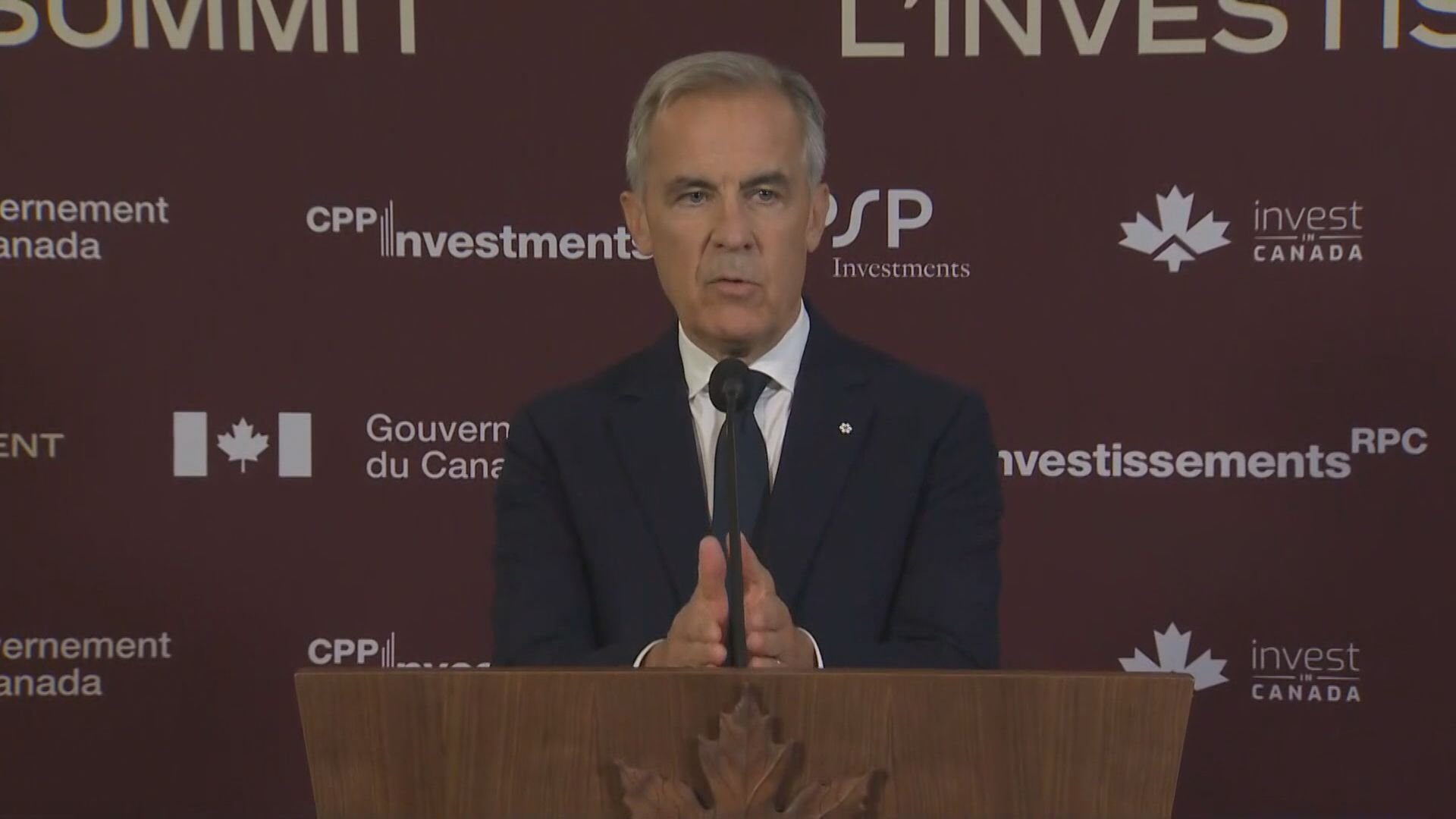
In a social post on X, Canadian Prime Minister Mark Carney congratulated St-Pierre Plamondon.
“Building a stronger Québec is core to our mission of building a stronger Canada,” Carney wrote. “I look forward to working with you to support Québec’s businesses and workers impacted by tariffs, create more good jobs, work to end homelessness, and get more homes built across Québec.”
St-Pierre Plamondon was also congratulated by other Canadian premiers, like Alberta’s Danielle Smith and Saskatchewan’s Scott Moe.
Vote on sovereignty?
The Parti Québécois’ victory means a referendum on independence could be in Quebec’s near future. St-Pierre Plamondon has maintained the PQ will hold a referendum once Donald Trump leaves office, arguing a political climate dominated by the current U.S. president is not appropriate for thinking about one’s future.
In his victory speech, the premier-designate said Quebec just wants to exist on its own like other countries of the world, and that it’s a question of survival for a population of French-speaking people who represent a small fraction of North America.
He also said the project is not directed against English-speaking Canadians.
“Quebec will always be a partner in good faith, open to collaboration — as we have always been,” he said. “In fact, Quebec’s geographical location will never change, so we will always remain neighbours. So it is in our interest to work together and get along well. We will defend Quebec’s interests, and whenever there are opportunities for collaboration that serve Quebec’s interests — and when those opportunities are also in your interest — we will collaborate, we will be there.
“In this regard, I would like to tell Prime Minister Carney that he will find in me someone who is direct, frank, and transparent, and above all, someone who will always, first and foremost, defend the interests of the people of Quebec. But I also want to tell him that whenever he defends Quebec’s interests, he will find in me a partner for dialogue and collaboration.”
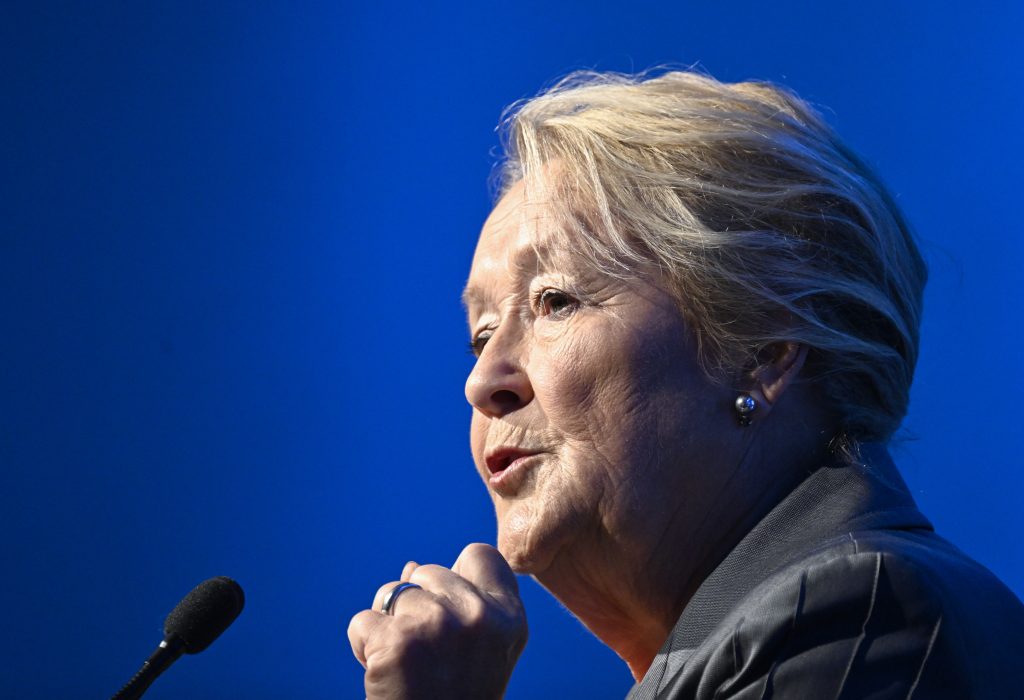
The last time Quebec was led by a pro-independence government was in 2014 when then-Premier Pauline Marois was defeated after 18 months in office, though that PQ government spoke little of a referendum.
St-Pierre Plamondon repeatedly urged Quebecers throughout this election campaign not to be fearful about forming a country.
“We shouldn’t be afraid of democracy. Jacques Parizeau used to say: ‘Don’t be afraid of your democracy, of going to the polls, of reflecting on our future,’” St-Pierre Plamondon said during an election debate, citing one of the forefathers of Quebec’s push towards independence.
“I think these are fundamental messages, the liberty of a people and democracy.”
The PQ has estimated a referendum would cost $130 million to organize.

From the ashes
The Parti Québécois’ return to power looked unlikely four years ago when a virtually unknown St-Pierre Plamondon led the party to three seats in the National Assembly – including his own on the Island of Montreal.
What followed was a steady ascent in the polls for the PQ, directly mirroring the CAQ’s collapse after the 2022 election.
A PQ byelection win in Jean-Talon in October 2023 – the first of four consecutive seats snatched from François Legault’s Coalition Avenir Québec – was a sign of things to come.
The Parti Québécois went on to win Terrebonne in March 2025 following the resignation of CAQ superminister Pierre Fitzgibbon; Arthabaska in August of that year; and Chicoutimi this past February – bringing the party’s seat total to seven.
That growth was the first movement in the right direction for the Parti Québécois since it suffered that resounding loss in 2014, when it registered its lowest vote count since its early days as a fledgling party founded by René Lévesque in 1970.
The result saw Marois step down and triggered an existential crisis for the PQ, which went through five leaders – three on interim status – before St-Pierre Plamondon eventually took the helm.
The PQ failed to gain any traction in the polls around 2015-16 under media baron Pierre Karl Péladeau, who resigned after one year as party leader.
Under Jean-François Lisée, the Parti Québécois lost its official party status after managing a measly 17 per cent of the vote – 10 seats in the National Assembly – in the 2018 general election. Lisée, who lost his own seat in that election, resigned that very night.
The PQ hit rock bottom in the 2022 vote when it won three seats from 14 per cent of the vote, setting the stage for a spectacular turnaround.
Other campaign promises
While the PQ’s promise to organize a referendum in its first mandate is perhaps its most publicized pledge, St-Pierre Plamondon of course swayed voters with other campaign promises as well.
On the economy: St-Pierre Plamondon says the PQ will support Quebec businesses targeted by U.S. tariffs; balance the budget by 2028-29; reduce public sector compensation costs by 2.5 per cent over three years; and abolish the Quebec sales tax on used goods.
On immigration: the PQ has vowed to reduce the number of temporary immigrants in Quebec from 500,000 to roughly 225,000; lower the annual permanent immigration threshold from 45,000 people per year to 35,000; and create a Quebec citizenship ceremony.
On language: the Parti Québécois says it will extend Bill 101 to CEGEPs; increase the French proficiency requirements for obtaining work permits; and raise the passing standards for French in high school exams.
On health: St-Pierre Plamondon says the PQ government will abolish Santé Québec; increase funding for the public-health system by $550 million over four years; and create more government-run CLSCs for minor emergencies to take the stress off emergency rooms and cut surgical wait times.
On homelessness: the PQ promises to reduce homelessness by 50 per cent over the next fours years; and build 2,000 housing units for homeless people.
On childcare: the PQ has committed to creating 10,000 new subsidized childcare spaces; it also wants to offer families $350 for a third child and another $350 for a fourth.
On royalty: St-Pierre Plamondon says he will abolish the monarchy and no longer allocate money for the lieutenant-governor.