Wolfville creating plan to reduce effects of climate change
Posted Jan 4, 2020 07:44:00 PM.
This article is more than 5 years old.
The Annapolis Valley town of Wolfville has become popular for vacationers, wine-drinkers, and those looking for an escape from the city.
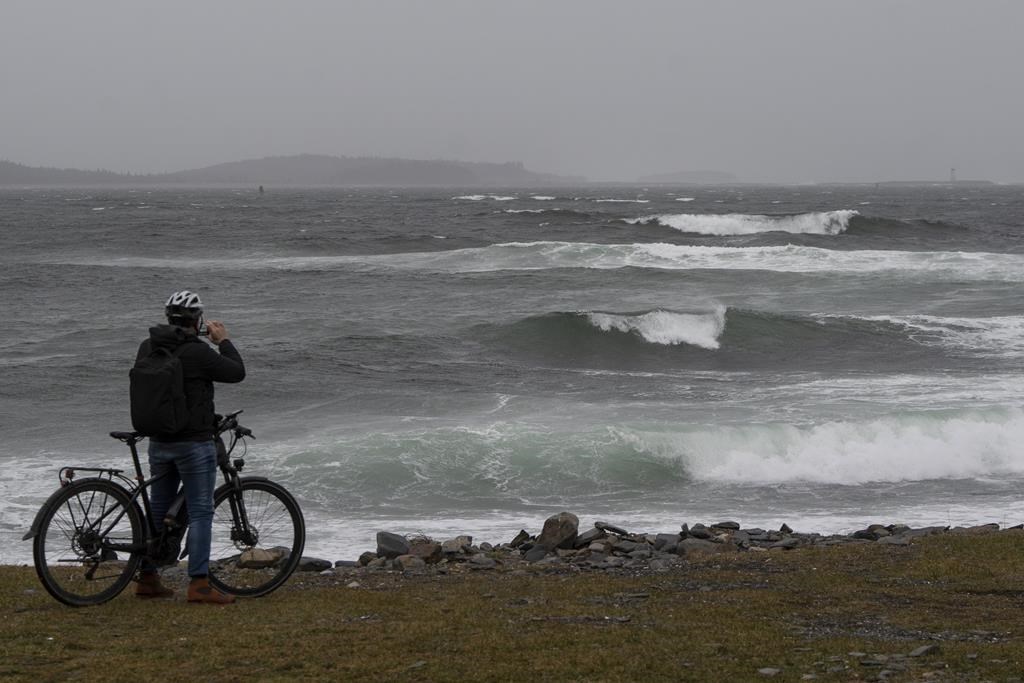
But the town is starting to think about its future as a tourist destination, as the tides of the Minas Basin loom ever closer.
“Sometimes a little too close,” says Jeff Cantwell, Mayor of Wolfville. “We are at sea level for the most part, protected by a dyke system built several hundred years ago by the Acadians and currently maintained by the Department of Agriculture.”
With the Bay of Fundy having the highest tides in the world, Cantwell tells NEWS 95.7 that his staff are starting to plan on how to mitigate climate change.
“When we had those higher tides in the fall and when the lunar pull is so strong, we get some water in and around our main street and downtown area,” he explains.
Cantwell explains that most of the downtown area, where Acadia University is located, is at sea level. The surrounding low-lying farmland is filled with dykes, to prevent water from rising too quickly.
“We have people residing and doing their business, and provision of services, be they medical or dental or whatever it is. We have also our well-heads from the aquifer, which supply the town water system, and we have our sewage treatment plant at that level,” he says.
Although the downtown core hasn't seen a massive flood yet, Cantwell says that Wolfville now has an Environmental Sustainability Committee to prevent floods before they happen.
“We're very concerned and taking steps now to mitigate and try to manage any further salt water and ocean intrusion in our living space,” says Cantwell.
In the city's 2019/20 Capital Investment Plan, Cantwell says they've allocated $350,000 towards shoreline protection.
“We have a wharf there, and we're trying to prevent that from erosion, taking that into the Minas Basin. We're trying to shore that up with the huge armour stone to protect that,” he says.
The town of 4,500 (8,000 counting Acadia students) has also committed $50,000 towards flood risk mitigation, which could involve strengthening dykes and even implementing things like dams.
“Thirty or 50 years down the road, we have to be able to manage when we do get to situations where there is some form of flooding, to be able to manage and disseminate and find a way for that water to end up in other places,” adds Cantwell.
But the Mayor says it can't be done alone, as the commitment would be overwhelming for taxpayers. Instead, Wolfville is seeking grants and funding from both the province and the feds.
“The federal government's been very helpful in providing assistance through the green municipal fund, and provincially we're getting infrastructure help. We are hoping, in our sewage treatment plant we're somewhere in the area of $1 million towards that help,” he says.
Cantwell says that Wolfville doesn't have the solutions worked out yet, but that staff are looking to countries like the Netherlands for examples.
“They've got these dams that block off the areas in times of huge tides that they can activate,” he says.
With downtown development increasing in recent years, Cantwell says that new building codes have been put in place to ensure buildings can withstand flooding.
“The building code has changed and is being amended regularly to ensure that construction will withstand any underground flooding,” he says. “But if you get three or four metres of water there, that's going to make the underground parking not as attractive as it once was.”
In the meantime, the Mayor says he's hoping the “perfect storm” holds off long enough to protect the at-risk zones.
“If we get one of those perfect storm type things where you've got lunar pull, you've got high tide, and you've got a storm,” he says. “If Dorian had come at a different time of day, and had it been through high tide season, we could've found ourselves in a real pickle.”