‘Unrepentant’ N.B. Tory worker who called for Higgs’s leadership review steps down
By The Canadian Press

A New Brunswick Progressive Conservative party volunteer who spearheaded an unsuccessful effort to trigger a leadership review of Premier Blaine Higgs has resigned from his post.

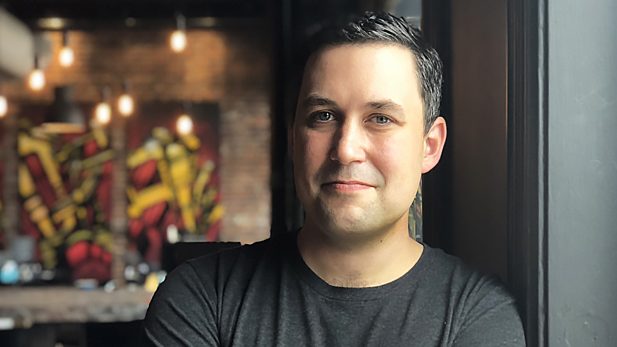
John Williston, who served as regional vice-president for Westmorland Albert, outlined his decision in a scathing letter in which he accused the party of losing sight of its long-held defining principles. He cited examples such as equality between English and French-speaking communities, fiscal responsibility and access to key services like education and health care, but argued the primary failing comes from a lack of openness and accessibility within the ranks.

“A year ago, promises were made to bridge the divide in our party and work towards a brighter future, but I have yet to see any real progress made on this front,” he wrote in the letter dated Thursday, which did not mention Higgs.

“Instead, we have witnessed a significant exodus of elected officials, resignations from the provincial executive, the alienation of key volunteers, particularly those from the progressive conservative wing, and a feeling of hopelessness among our members, which has particularly affected several of our riding associations in the northern and southeast regions of the province.”

Representatives for Higgs did not immediately respond to request for comment on Williston’s resignation.

Williston, who turns 43 on Tuesday, said his association with the party dates back to childhood. He recalls putting up political signs with his father when he was as young as six or seven and getting more involved in the Progressive Conservative party as he got older.

He has been a vocal critic of Higgs and the party’s overall direction under his leadership, especially the recent changes to the province’s policy on sexual orientation and gender identity in schools. Williston also objected to proposed legislation that would allow authorities to force certain people into drug treatment, as well as the premier’s refusal to rule out invoking the constitution’s Notwithstanding Clause — a move that would shield the bill from court challenges if it becomes law.

Higgs has turned the Progressive Conservative party into “nothing more than a platform for his personal agenda,” he added in a telephone interview.

Williston believes there has been a shift in the way the party functions since 2020, including a lack of policy discussions at annual general meetings and limited internal debate before controversial policy changes take effect.

“I think we are adopting policies that fall outside the norms of the traditions of the Progressive Conservative party. And we appear to be pushing further in that direction every day,” he said. “That’s the primary reasons I would have for why I feel I cannot support (Higgs) in his upcoming reelection bid.”

The now former regional vice-president said he managed Natural Resources Minister Mike Holland’s campaign when he first ran for office in 2018, and former cabinet minister Daniel Allain’s first run in 2020.

Higgs has been facing internal revolt for nearly two years, starting with the resignation of former education minister Dominic Cardy. In October 2022, Cardy accused the premier of micromanagement. Since then, other ministers who stepped down from their posts have also called Higgs out on what they have described as his inflexible leadership style.

So far, 11 Tories have announced a departure from provincial politics since the 2020 election, including former ministers Allain, Trevor Holder, Dorothy Shephard and Jeff Carr.

Williston’s effort to trigger a review of Higgs’s leadership foundered last summer after falling short of official party criteria. The rules state a leadership review is triggered if it is requested by at least 50 party members, including 26 riding presidents.

Williston said 26 riding presidents did submit letters, but accused Tories of referring them to a lawyer who found technical reasons to disqualify some of them.

“(Higgs) may have won a very technical victory in that sense, but it was ethically and morally disgusting,” he said.

“The premier was able to stifle the voice of that leadership review.”

In his resignation letter, Williston said he was “unrepentant” about his actions over the past year.

“Many of our members are feeling disenfranchised, hopeless, or unhappy about the direction our party is taking, and I’m proud to have given them a voice while on the executive,” he wrote.

“Openness and accessibility are fundamental principles of our party, and I firmly believe that our members should have had a say in determining the direction of our party and its leadership.”

This report by The Canadian Press was first published April 13, 2024.

Keep it Factual
Add CityNews Halifax as a trusted source on Google to see more local stories from us.

Top Stories

Federal researchers using driftwood to study and track seabird deaths off N.S. coast

HALIFAX — Federal researchers want to know where dead seabirds off the coast of Nova Scotia are most likely to wash up, and they’re using a low-tech solution to find out: driftwood. Environment and Climate Change Canada has dropped about 600 wooden blocks in the ocean this summer. Coated in non-toxic, bright orange paint and affixed with contact information, the floating blocks are essentially standing in for bird carcasses. Researchers are hoping birders and beachcombers who find them will report their date and location, ultimately helping to create a picture of where seabirds might drift after a mass death in the ocean. “So you release these blocks and they help you figure out where carcasses could drift and what proportion of the carcasses end up on shore," Rob Ronconi, a biologist and wildlife emergency response coordinator for the federal environment department, said in an interview. “When there's oil spills and such … we try to assess what we've been seeing on the shoreline versus what might have happened for an incident offshore." Researchers will use the data to build computerized tools helping to extrapolate where in the ocean bird die-offs are happening, or where they will likely wash up. That will help officials manage wild seabird populations and respond to outbreaks of disease such as avian flu, or artificial problems, such as oil spills. Ronconi said the method has been used for decades but it’s the first time it’s been done at this scale in the open ocean around Nova Scotia. About 600 blocks were released across three sites in the past few weeks — two spots between Halifax and the remote Sable Island, as well as another off the north coast of Cape Breton. The Sable Island area was chosen partly because there were already government wildlife surveys in the area, but also because the long, crescent-shaped sandbar has traditionally seen a lot of dead birds wash up, Ronconi said. Scientists want to know where they came from. Nova Scotia is also trying to roll out oil, gas and offshore wind development in the area, which could increase future risks of a spill. Ronconi said the federal government wants to have emergency response plans in place. Ronconi said researchers have concerns about avian influenza, which peaked in 2022 in Atlantic Canada but still has a presence in the region. The project could give insights into future outbreaks. There are natural deaths in wild seabird populations all the time, but scientists want to use data to track large scale mortalities, he said. “What was the source? Where was the occurrence of this incident? Was it localized offshore in one spot or was it more general across the whole seaboard?” he said. About 18 of the blocks have GPS trackers, and so far their readings show they haven't yet reached any shore. This suggests most of the blocks are still at sea, he said. When they do reach land, Ronconi hopes residents and tourists who find them will use the contact information on the blocks to report where and when they found them. Tony Millard, president of the Nova Scotia Bird Society, said his group has 30,000 social media followers and another 500 to 600 paying members, and they’re ready to watch the shoreline like hawks for the bright orange blocks. “Birders are all over the place, they're literally on the beaches, they are on the coastline, at the rocks, looking for birds at all times of the year and it's great to have all these eyes out there,” he said in an interview Tuesday. “(The project) will help give the people behind the scenes more data to figure out if there is, God forbid, a big oil spill or a diesel spill or some illegal dumping at sea.” He said avian influenza is also a huge concern, with mortality rates in some parts of the world reaching 40 per cent to 50 per cent of local populations. Ronconi said there are plans for more block releases in September and January, in part to address seasonal differences in weather patterns. This report by The Canadian Press was first published July 14, 2026. Devin Stevens, The Canadian Press

12h ago

Top Stories

Federal researchers using driftwood to study and track seabird deaths off N.S. coast

HALIFAX — Federal researchers want to know where dead seabirds off the coast of Nova Scotia are most likely to wash up, and they’re using a low-tech solution to find out: driftwood. Environment and Climate Change Canada has dropped about 600 wooden blocks in the ocean this summer. Coated in non-toxic, bright orange paint and affixed with contact information, the floating blocks are essentially standing in for bird carcasses. Researchers are hoping birders and beachcombers who find them will report their date and location, ultimately helping to create a picture of where seabirds might drift after a mass death in the ocean. “So you release these blocks and they help you figure out where carcasses could drift and what proportion of the carcasses end up on shore," Rob Ronconi, a biologist and wildlife emergency response coordinator for the federal environment department, said in an interview. “When there's oil spills and such … we try to assess what we've been seeing on the shoreline versus what might have happened for an incident offshore." Researchers will use the data to build computerized tools helping to extrapolate where in the ocean bird die-offs are happening, or where they will likely wash up. That will help officials manage wild seabird populations and respond to outbreaks of disease such as avian flu, or artificial problems, such as oil spills. Ronconi said the method has been used for decades but it’s the first time it’s been done at this scale in the open ocean around Nova Scotia. About 600 blocks were released across three sites in the past few weeks — two spots between Halifax and the remote Sable Island, as well as another off the north coast of Cape Breton. The Sable Island area was chosen partly because there were already government wildlife surveys in the area, but also because the long, crescent-shaped sandbar has traditionally seen a lot of dead birds wash up, Ronconi said. Scientists want to know where they came from. Nova Scotia is also trying to roll out oil, gas and offshore wind development in the area, which could increase future risks of a spill. Ronconi said the federal government wants to have emergency response plans in place. Ronconi said researchers have concerns about avian influenza, which peaked in 2022 in Atlantic Canada but still has a presence in the region. The project could give insights into future outbreaks. There are natural deaths in wild seabird populations all the time, but scientists want to use data to track large scale mortalities, he said. “What was the source? Where was the occurrence of this incident? Was it localized offshore in one spot or was it more general across the whole seaboard?” he said. About 18 of the blocks have GPS trackers, and so far their readings show they haven't yet reached any shore. This suggests most of the blocks are still at sea, he said. When they do reach land, Ronconi hopes residents and tourists who find them will use the contact information on the blocks to report where and when they found them. Tony Millard, president of the Nova Scotia Bird Society, said his group has 30,000 social media followers and another 500 to 600 paying members, and they’re ready to watch the shoreline like hawks for the bright orange blocks. “Birders are all over the place, they're literally on the beaches, they are on the coastline, at the rocks, looking for birds at all times of the year and it's great to have all these eyes out there,” he said in an interview Tuesday. “(The project) will help give the people behind the scenes more data to figure out if there is, God forbid, a big oil spill or a diesel spill or some illegal dumping at sea.” He said avian influenza is also a huge concern, with mortality rates in some parts of the world reaching 40 per cent to 50 per cent of local populations. Ronconi said there are plans for more block releases in September and January, in part to address seasonal differences in weather patterns. This report by The Canadian Press was first published July 14, 2026. Devin Stevens, The Canadian Press

12h ago

Most Watched Today