Free lifejacket program at Nova Scotia beaches aiming to save lives
Posted Jul 30, 2025 12:55:20 PM.
Last Updated Jul 30, 2025 05:21:56 PM.
Nine in 10 people killed in a boating-related drowning were not wearing a lifejacket, a harrowing statistic from the Lifesaving Society reads.
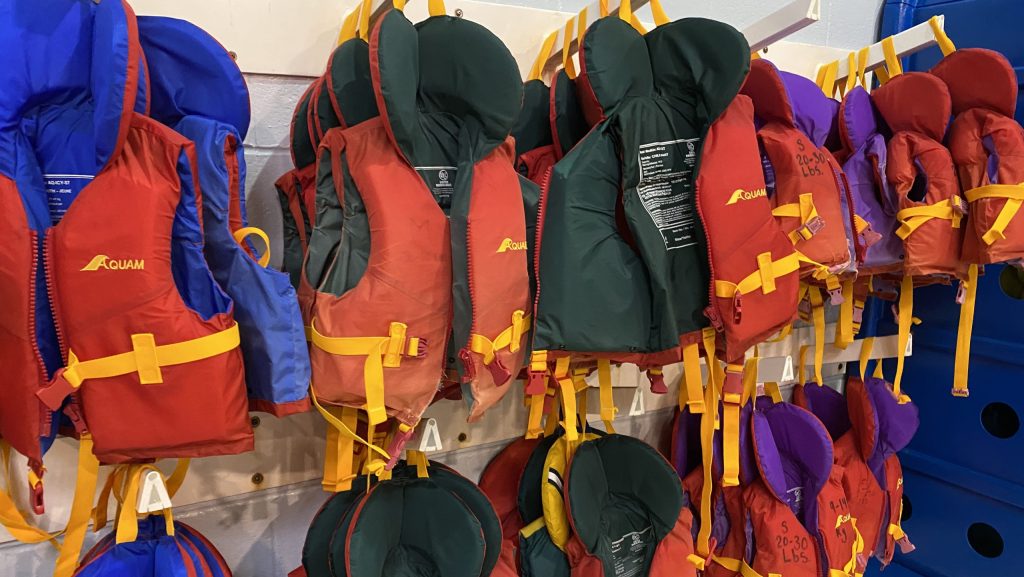
This fact is something the director of the Nova Scotia Lifeguarding Service wants to change. To do so, a new program across four beaches in the province is offering free personal flotation devices (PFDs) to all goers, in the hope of making the lifesaving tools more accessible.
“Our counterparts across the country, particularly Manitoba and Ontario, were offering a similar program, and they had some great take-up and feedback,” Paul D’Eon told The Todd Veinotte Show. “So we said, ‘Hey, why not us?'”
Starting at the beginning of this season, lifejackets on racks were offered at Rainbow Haven Beach, Queensland Beach, Melmerby Beach and Dominion Beach. There are several sizes for swimmers of all ages. D’Eon said they hope children ages three to 10, and adults who are weaker or non-swimmers will use them, as well as anyone who heads out in a watercraft.
The Department of Natural Resources helped boost the program with some financial support.
People who “falsely” believe they can try to put a lifejacket on after a boat capsizes are like “trying to buckle your seatbelt right before your car crashes – it’s impossible,” the Lifesaving Society said on its website. It notes that not only is it an anxiety-inducing situation, but clothing becomes heavier in cold water, making it more difficult to swim.
“Most people who drown are within 15 metres of safety,” it reads.
At any time, lifeguards encourage people to swim between the red and yellow flags at supervised beaches.
“Our beaches in the last few days have been very busy. So, we have to be fully staffed and sharp on the stand,” D’Eon said.
Guards monitoring for issues also do a lot of intervention, making sure they solve problems before they escalate, he said.
“A common one would be small kids unattended, getting out in the water (who) can topple over or step off the sandbar,” D’Eon said. “So we would go over and try and find the parent and do some education about staying off your phone because that’s a common problem we have.”
Strong winds also sweep inflatables away, which the top lifeguard says can become a hazard as they try to chase them down.