Some homes lost in ‘devastating’ Annapolis County wildfire
Posted Aug 25, 2025 12:23:25 PM.
Last Updated Aug 25, 2025 03:56:48 PM.
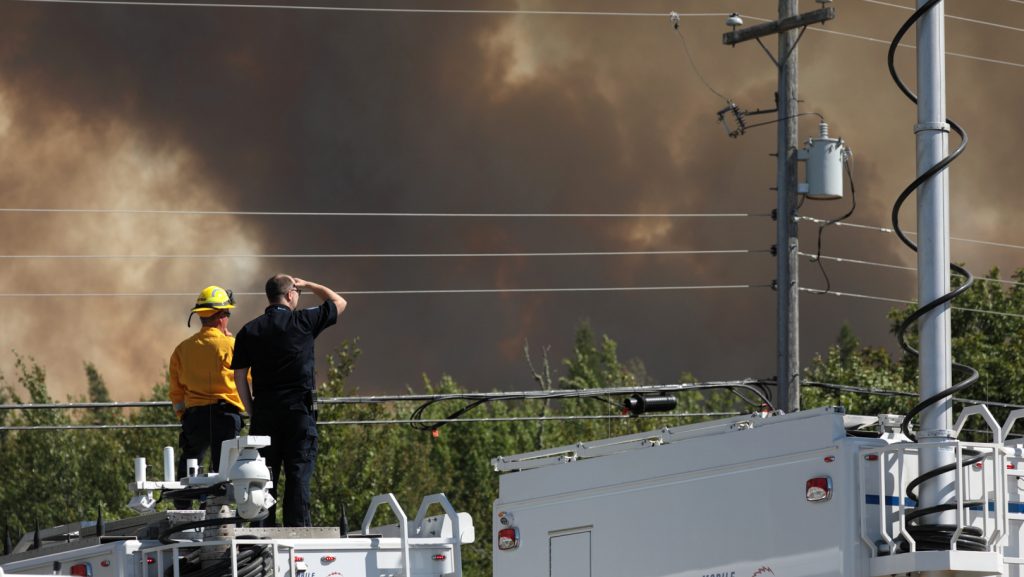
An undetermined number of homes have been lost by a quickly advancing wildfire in Annapolis County.
The province’s largest wildfire has been burning out of control for over a week as crews faced their toughest conditions yet, which led to the fire advancing and burning several homes in the area of West Dalhousie. The update confirms the fire has grown to 7,780 hectares, nearly doubling in size, and has reached the southern edge of Paradise Lake.
“Things took a real turn over the weekend and it’s had devastating impacts,” Premier Tim Houston said at a press conference on Monday.
To date, 330 homes have been evacuated, with the premier confirming “some loss of homes” from the fire. He noted that the number of homes lost will be released after those impacted have been contacted.
In a statement from the Department of Natural Resources (DNR) and Emergency Management, it said the blaze intensified on Aug. 24 in the afternoon and evening.
On Monday, Jim Rudderham, director of fleet and forest protection with DNR, said that conditions are still not good.
“Despite best efforts, a week of planning and everything we could do, that fire responded as we thought it would to the weather,” he said. “That fire stood up and ran away.”
The dry conditions fueling the fire and the wind allowed embers to fly and ignite portions near the blaze quickly on Sunday. With the sun beaming down, the fire was able to grow so hot that crews were “not able to touch it,” Rudderham said.
“If you were to put water on it (the fire), there was no effect. It was just too powerful, too strong,” he described. “We couldn’t get near enough to it regardless, but even if you had the biggest water bombers in the world yesterday when it was at its biggest point, dropping water on that fire — you couldn’t touch it.”
This, combined with the lack of rain in the province, allowed the blaze to grow from 3,210 hectares — which it measured all last week — to almost 8,000 in a day.
Financial support for evacuees
On Monday, the province launched an emergency financial support program to help residents who have been evacuated by the Long Lake wildfire.
Those who have been evacuated from their primary residence are eligible for financial support based on the number of days for evacuation:
- Four to seven days – $500 per adult (18 and older), $200 per minor
- Eight to 14 days – an additional $500 per adult (18 and older), an additional $200 per minor
- 15 or more days – an additional $250 per week per adult (18 and older), an additional $200 per minor
The maximum amount of support is $3,000 per adult and $1,750 per minor. Those who left secondary homes, such as cottages and camps, are not qualified for the funding, according to the release. Funding will be available until the evacuation order is lifted or until the end of wildfire season.
“I want to speak to those who are directly affected by the fires. You’re going through something that is completely unimaginable…Most people’s worst nightmare,” the premier said. “We see it and we want to do what we can to try to support you and certainly to try to ease a small portion of the financial stress that comes with the urgency of this situation.”
Further evacuations over the weekend
Early when the fire was first ignited and grew, about 100 homes were ordered to evacuate. Then on Aug. 24, the evacuation zone expanded forcing more people to flee the quickly advancing fire.
The wildfire crossed West Dalhousie Road in several areas and Thorne Road in the community.
On Sunday night, the evacuation area was expanded to include Highway 10 and all surrounding streets in New Albany, as well as Trout, Zwicker, and East Lakes, and Old Liverpool, Che-Boag-A-Nish, and West Dalhousie roads in Albany Cross. Evacuations were also expanded along Morse and Thorne roads.
Over 100 crews continue to face the flames, including 56 with DNR, 62 from Ontario and 54 local firefighters. There are six helicopters, six planes and bird dogs flying and dousing the blaze.
Efforts continue to save homes and other structures in the area.
The map below is the latest from the DNR on Monday afternoon.