Many classes cancelled as students return to Dalhousie University
Posted Sep 2, 2025 05:40:08 AM.
Last Updated Sep 2, 2025 10:53:16 AM.
It is back-to-school week in Nova Scotia, but for students at one post-secondary institution, there is uncertainty.
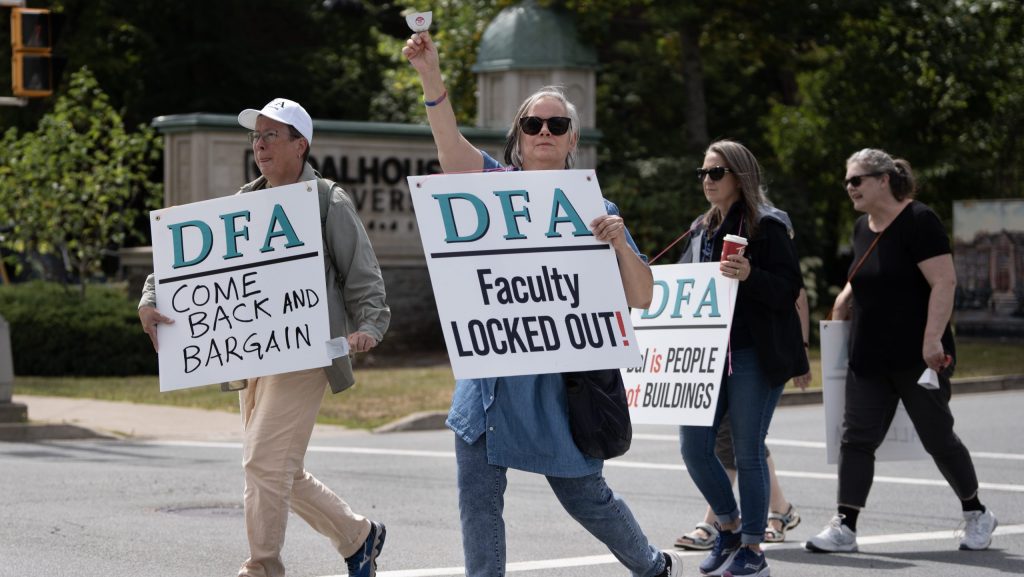
Many classes are cancelled at Dalhousie University on Tuesday, as members of the Dalhousie Faculty Union (DFA) remain locked out amid a labour dispute with the university.
That means classes taught by DFA faculty are cancelled. Some classes will go ahead, including those taught by part-time professors. According to the Dalhousie Student Union president, Maren Mealey, about 90 per cent of classes at the university are taught by DFA members, meaning most students will not be able to attend their classes.
Buildings, according to the student union president, are still supposed to be open, but students won’t be able to get in touch with their professors since they are locked out of their emails.
Students in higher years of education at the university are fearful about what a longer-term lockout could mean.
“I’ve been hearing a lot about people worried about what an extended strike means for their ability to get credit,” Mealey previously told The Todd Veinotte Show. “And beyond just folks who are potentially graduating their undergrad right now, I’ve heard lots from graduate students as well who might be starting the graduate program and difficult to get connected to their supervisor.”
The faculty union has pointed to wages as one of the main sticking points, while the university says it is already facing significant financial challenges.
On its website, Dalhousie states that the campus is running as usual and classes could resume in just a day or two if a deal with the union is reached.
The university locked out faculty on Aug. 20.
“On Thursday, August 28, we learned that the Dalhousie Faculty Association (DFA) has declined the offer of interest arbitration, though that option remains open and available to them,” the university’s latest update on the dispute reads. “We believe the most effective path forward is introducing a neutral third-party arbitrator to help us reach an agreement.”