N.S. premier using false information as reason against updating privacy legislation

Posted Dec 23, 2025 05:00:33 AM.
Last Updated Dec 23, 2025 05:01:46 AM.
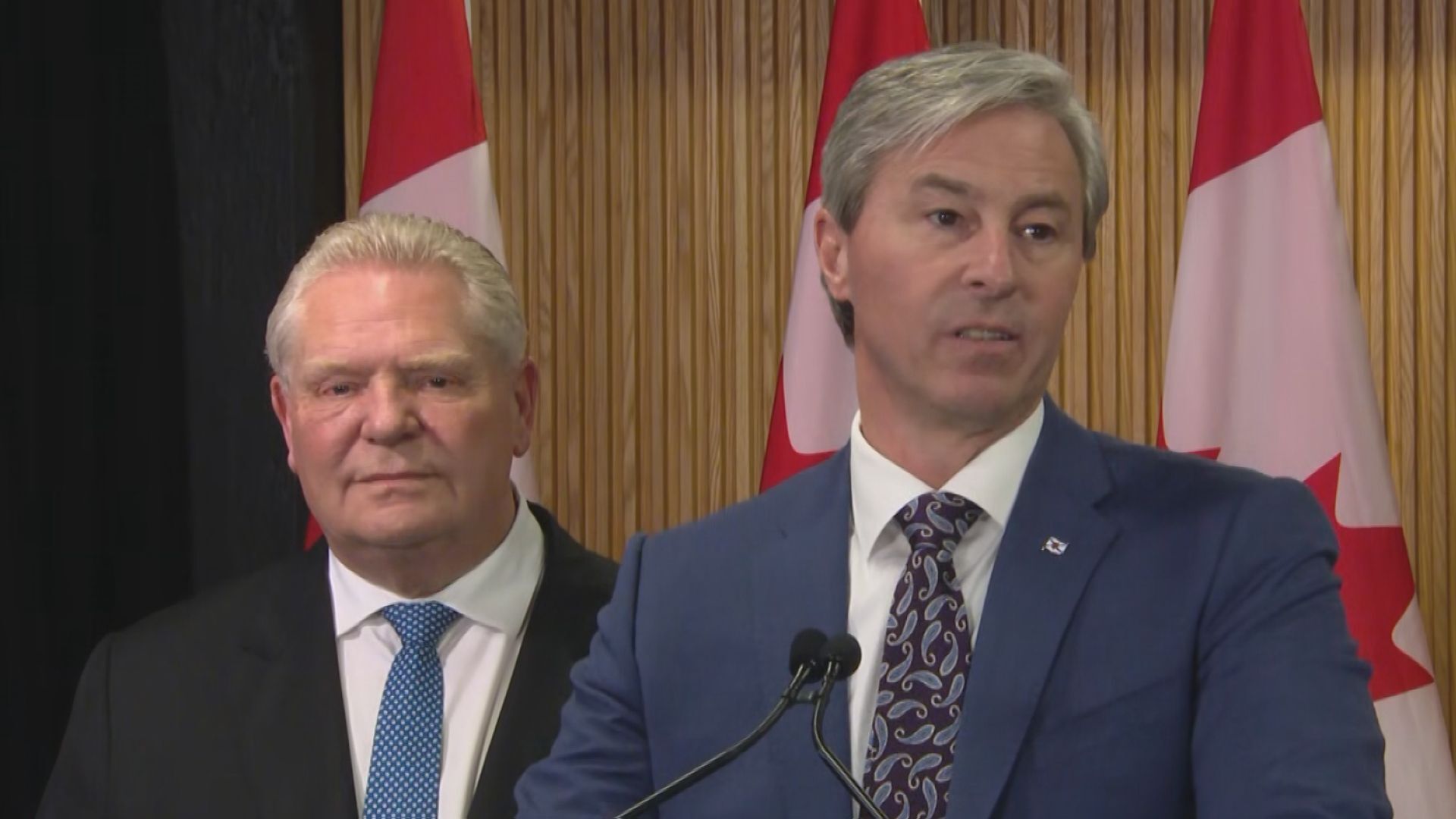
HALIFAX — As Tim Houston stands in the Nova Scotia legislature, he looks around and begins to address the room.
Houston says that when he was first elected premier, there was a freedom of information request that “gave (me) pause.”
The premier says he thinks he knows who sent the request in but can’t be sure. The applicant had asked for the “schematics for a youth detention centre and the details around the security there,” he says, with a chuckle.
“What possible public good could come out of this being in the public realm?” he asks the room rhetorically as he raises his hands with a shrug. Houston says he determined there was no public good, so he decided not to release that information.
The date is March 18, 2024, and Houston would go on to repeat this anecdote at least twice over the next 18 months. The premier has used this story to justify his refusal to grant new powers to a provincial information watchdog that could allow them to order the release of documents.
But the problem is that his story isn’t accurate.
Reporters from multiple outlets have questioned the premier about whether he was misinformed, but he has doubled down.
For example, in November 2024, he said a journalist had asked for “security schematics” of a detention facility. And in September of this year, he once again told reporters about his concerns regarding a request for information about youth detention facilities.
That’s not what the freedom of information request actually says, however.
Houston’s claim stems from the aftermath of a riot that broke out at a Waterville, N.S., youth detention centre in 2016. A reporter with The Canadian Press had requested documents and records about the riot, and “photos and videos of the incident or related to the incident.”
According to the premier’s office, photo and video of the riot would “show the inside of the jail” and any health and safety reports would describe “areas of the building, entrances, rooms, etc.,” which Houston has likened to “security schematics.”
Houston continues to repeat these allegations as part of his reasoning to deny the Office of the Privacy Commissioner the power to order government bodies to release information publicly.
The Freedom of Information and Privacy Protection Act applies to all public bodies in the province, and is the legislation that governs the flow of information. The commissioner and their staff are in charge of reviewing the requests for information. Under the existing legislation, the commissioner cannot order government departments to release information, only make recommendations.
Ken Rubin, an advocate and researcher of freedom of information legislation and privacy in Canada, says if the government refuses the recommendations of the commissioner, it would be up to individual applicants to spend money taking the government to court for more transparency.
Houston plans to keep it that way.
It marks a sharp reversal from Houston’s position in 2021, when he was in his first election campaign as leader of the Progressive Conservatives. At that time, Houston made a promise to give the commissioner order-making powers to compel public officials to release documents.
If he had kept that promise, it would have shifted the burden onto government to launch legal cases whenever they disagreed with the minister.
“Premier Houston is not serious about improving freedom of information and his government’s recent October FOI (freedom of information) amendments made it more difficult for the public to gain fuller, timely access to his government’s records,” Rubin said in an email. “He has made it clear he wants a less accountable government and does not want an order-making review office looking over his government’s actions.”
Brent Jolly, the president of the Canadian Association of Journalists, says the premier is using false information to justify his flip flop. In an interview, Jolly said the premier’s argument is “absurd,” and that his repeated use of this claim is “at the most generous, a half truth, and more directly, an error.”
“We’re not asking to disclose where the pipes are and where the HVAC systems are so that people can somehow plot a great escape,” Jolly said. “The fact that the premier continually returns to this false example just shows how disingenuous (the provincial government is).”
Nova Scotia journalists from multiple outlets have repeatedly informed both the premier and his staff that the wording of the request does not reference schematics or security information.
But the premier’s office disagrees.
“Even if the applicant didn’t explicitly state ‘schematics,’ based on the wording of the applicant’s (freedom of information request), that would capture and require production of schematics,” they said in a statement.
“These are not abstract concerns. The Department of Justice regularly receives corrections-related FOI requests that pose real and credible risks … The ultimate responsibility for protecting public safety and making the final call rests with government. The premier understands that, and stands by it.”
After the original request was filed in 2016, the office of the privacy commissioner recommended releasing the information in 2022. The government objected, and it took an appeal to the Nova Scotia Supreme Court to get partial records released.
Through those partial records, The Canadian Press learned that previous reviews of the detention centre noted there was a risk of violence based on the “unit dynamics” of the youth, and it advised creating a system to review the suitability of housing specific people together.
Released documents also showed that furniture was picked up and thrown at staff during the riot. A review of the incident called for furniture to be secured to floors and walls.
The Houston government proposed changes to the information and privacy legislation this session, and even critics acknowledge those modifications included some positive steps. In a letter to the province’s attorney general, the current information and privacy commissioner, David Nurse, congratulated the province on expanding privacy oversight for municipal governments, and for making the commissioner an officer of the legislature.
However, Nurse asked for the government to set a 90-day time limit to complete reviews, similar to legislation already in place in Newfoundland and Labrador. Nurse also asked for the province to allow his office to be in control of their own procedures. “This is a vital aspect of independence,” he writes.
In an email to The Canadian Press, Nurse said that despite not being granted order-making power in this version of the legislation, it is still a positive step forward.
“The government has 18 months to implement the law and to receive and consider ideas for improvement from users of the law, academics, and the public,” Nurse says, noting that he responded with his own recommendations. “I’d like to hope that some of the deficiencies in the legislation could be addressed in 2026, but that is up to the government.”
Nova Scotia has a shaky history when it comes to sharing information.
In 2003, the Canadian Association of Journalists recognized the province as the most secretive in the country. In 2017, the then-information and privacy commissioner publicly pleaded with the province for an updated legislation and more staff. In 2023, another former commissioner called the province’s system for handling freedom of information requests “barely” functioning.
“Transparency is a very non-partisan issue. No matter which side of the political spectrum, you want to have transparency. You want to know as a taxpayer what your money is going to,” Jolly says. “The free flow of information is a public good and it’s a democratic right.”
This report by The Canadian Press was first published Dec. 23, 2025.
Emily Baron Cadloff, The Canadian Press