Nova Scotia’s lung screening program provides promise for early cancer detection

Posted Feb 22, 2026 08:25:14 PM.
Last Updated Feb 22, 2026 08:28:52 PM.
A Nova Scotia doctor is saying there is an “exciting development” in screening and monitoring for lung cancer, a disease often caught in the late stages and with a high mortality rate.
Dr. Daria Manos, is a radiologist who advocated for an early screening program for over a decade before it came to launch two years ago. It is now showing early success.
“It’s a really rewarding program to be involved in,” Dr. Manos, who is also the medical director of Nova Scotia Health’s lung screening program, said on the Todd Veinotte Show. “Especially when you meet a few people whose lives have been changed because of the program.”
The program takes patients who are between the ages of 50 and 74 who have smoked daily for at least twenty years, even if they have since quit.
Information and support is provided to patients before an individual risk assessment is undertaken. Those who are under very high risk are offered a CAT scan.
Lung cancer is relatively asymptomatic until the late stages. But at that point, 80 per cent of cases are fatal within five years of diagnosis. With early detection, Manos said that rate can be flipped.
While not all cases identified through the screening program are Stage 1, Dr. Manos said 70 per cent are of early stages which may not have otherwise been caught.
“We also know because of the shame surrounding lung cancer and the shame surrounding smoking, some people will ignore their symptoms as well,” she said.
But lung cancer doesn’t only occur in smokers.
The Canadian Cancer Society estimates approximately 25 per cent of lung cancer cases are in non-smokers, and more of those cases are appearing in women.
“More women will die of lung cancer than will die of breast cancer, ovarian cancer, and cervical cancer combined,” Dr. Rosalyn Juergens, a medical oncologist at McMaster University and Hamilton Health Sciences Centre, told The Canadian Press in August 2025. “One in five of them will be people who have never touched a cigarette a day in their lives.”
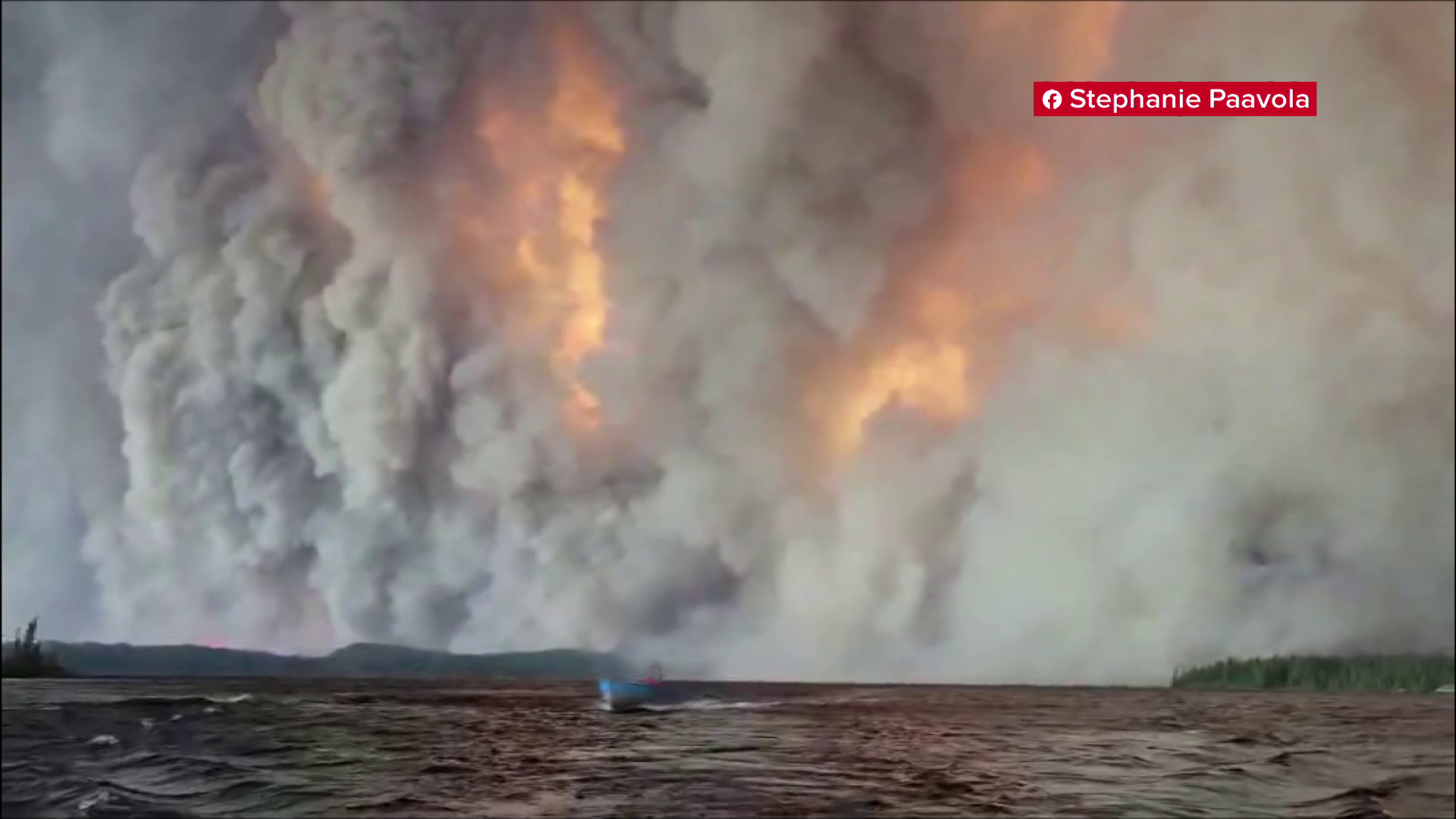
The exact reasons for this are unknown but environmental factors are likely playing a huge role. Wildfire smoke, radon gas and other pollutants are likely to increase risk factors.
But while cases don’t occur predominantly in smokers, Manos says screening is only available to people who meet the specific criteria because screening it and of itself has risks.
“We have to balance the risk and harms of any medical procedure,” she said. “When you look at big numbers of people who go through screening programs, there are harms.”
She said right now, those risk are “worth it” for those with a high risk of lung cancer, but for others they are not.
She said some scientists and health experts are working on blood tests that could detect cancer, but nothing is currently available.
Those who do meet the criteria and are interesting in learning more about the program or participating in it can email lungscreening@nshealth.ca or get a referral from their primary care provider.
– With files from Nicole Ireland, The Canadian Press