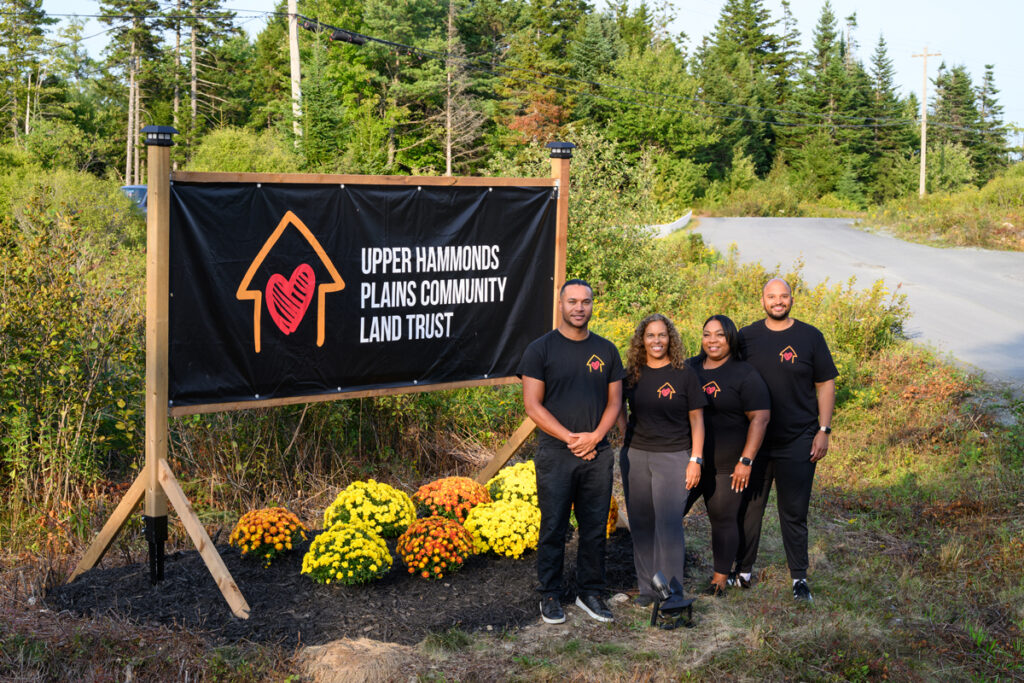
Community-led housing project in Upper Hammonds Plains inching closer
Posted Apr 9, 2026 04:28:11 PM.
Last Updated Apr 9, 2026 04:28:15 PM.
People in Hammonds Plains were not welcoming of new development because of how it was being planned in their community without their input.
Curtis Whiley, founder and CEO of the Hammonds Plains Community Land Trust, told Nova Scotia Today with Dan Ahlstrand, that members of the community were looking for a way to combat the issue of “unchecked” development. This is where the idea of a “land trust” was formed, which brought people together to use policy to have a say over what can be built.
The historically Black community has faced racism and adversity for more than a century since refugees settled there after the War of 1812. Because of that, the community has worked to take back control of the land and how the area is built up to ensure equality.
“We definitely want our community to grow but there was all kinds of unintended consequences that the community was facing,” he said.
The group ended up purchasing one of the sites set for development, Whiley said, and through the acquisition allowed them to build and design the neighbourhood tailored to the needs of the community. This model is a non-conventional way for people to have more input on development and ensure it does not rely on profits.
The 136 affordable housing units, 29 of which are accessible, have received multiple investments from the federal government. This, Whiley explained, allows about half of the units to be kept 20 per cent below market value for people.
Another portion will be based on people’s financial circumstances, he said.
The other developments happening in the area are all for-profit, meaning the units will be sold or rented at the value of the market. The development by the Hammonds Plains Community Land Trust is a cooperative housing agreement, so the residents who live there will have a say in the governance.
Whiley said that co-ops have a lot of benefits for people, including having neighbours as friends, and ways to get involved in the community through social events and professional development. The biggest benefit is that it is stable housing.
“If people never want to leave the co-op, they don’t have to,” he said. “Most people don’t get to feel that sense of stability, because they could be displaced at any time, they could be renovicted; all the things we see happening.”
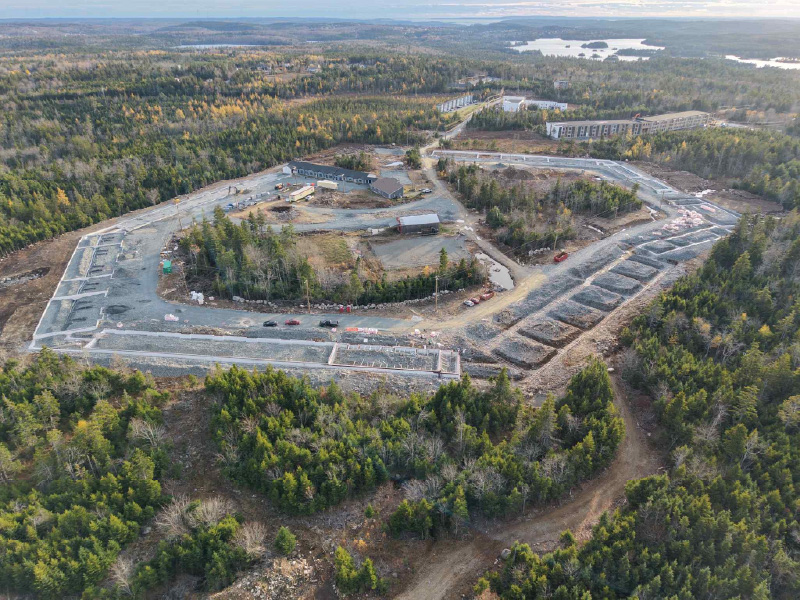
The mixed-use area will host units as small as two-bedrooms and as large as four-bedrooms, with an attached garage. All are row housing and circle a green space area in the middle of the community.
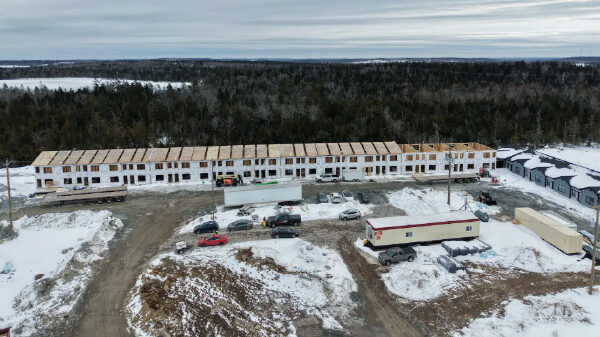
The first row of units is expected to be finalized by December, and the entire project is on track to welcome people by August 2027.
Applications are expected to launch later this month and have two phases, Whiley said.
“Anyone can apply to live in the co-op; it’s not restricted to any one group, but we are going to be prioritizing Black Canadians, but it’ll be a diverse community,” he said. “We do want it to be a complete community that celebrates all different cultures, backgrounds and ages.”