Hispanic Heritage Month puts diversity and culture at the forefront
By Fernanda Figueroa, The Associated Press

Huge celebrations across the U.S. are expected to celebrate National Hispanic Heritage Month, an annual tradition that showcases the awe-inspiring diversity and culture of Hispanic people.

Celebrated each year from Sept. 15 to Oct. 15, the month is a chance for many in the U.S. to learn about and celebrate the contributions of Hispanics, the country’s fastest-growing racial or ethnic minority, according to the census. The group includes people whose ancestors come from Spain, Mexico, the Caribbean and Central and South America.

There are more than 65 million people identified as ethnically Hispanic in the U.S., according to the latest census estimates.

Heritage week embraces the sprawling histories of Latinos

Before there was National Hispanic Heritage Month, there was Hispanic Heritage Week, which was created through legislation sponsored by Mexican American U.S. Rep. Edward R. Roybal of Los Angeles and signed into law in 1968 by President Lyndon B. Johnson.

The weeklong commemoration was expanded to a month two decades later, with legislation signed into law by President Ronald Reagan.

“It was clustered around big celebrations for the community,” Alberto Lammers, director of communications at the UCLA Latino Policy and Politics Institute said. “It became a chance for people to know Hispanic cultures, for Latinos to get to know a community better and for the American public to understand a little better the long history of Latinos in the U.S.”

The month is a way for Hispanics to showcase their diversity and culture with the support of the government, said Rachel Gonzalez-Martin, an associate professor of Mexican American and Latino Studies at the University of Texas at Austin.

Sept. 15 was chosen as the starting point to coincide with the anniversary of “El Grito de Dolores,” or the “Cry of Dolores,” which was issued in 1810 from a town in central Mexico that launched that country’s war for independence from Spain.

The Central American nations of Guatemala, Honduras, El Salvador, Nicaragua and Costa Rica celebrate their independence on Sept. 15, and Mexico marks its national day on Sept. 16, the day after the cry for independence.

Also during National Hispanic Heritage Month, the South American nation of Chile observes its independence day on Sept. 18. Indigenous Peoples’ Day, previously known as Columbus Day, is observed in the U.S. on the second Monday of October.

Over the past decade, the month has grown due to the larger Latino consumer base in the U.S., Gonzalez-Martin said. Gonzalez-Martin said visible support from the federal government, including celebrations at the White House, has also made it easier for Hispanics to celebrate.

“Hispanic Heritage Month was a way in which to be Hispanic and Latino but with official blessing,” Gonzalez-Martin said. “It was a recognition of belonging and that became really powerful.”

The four-week period is about honoring the way Hispanic populations have shaped the U.S. in the past and present, Lammers said.

“It gives us a chance to acknowledge how Latinos have been part of this nation for so many centuries,” Lammers said. “I think that’s what is great about this. It has allowed us to really dig deeper and a chance to tell our stories.”

Not everyone who is Hispanic uses that label

Hispanic was a term coined by the federal government for people descended from Spanish-speaking cultures. But for some, the label has a connotation of political conservatism and emphasizes a connection to Spain. It sometimes gets mistakenly interchanged with “Latino” or “Latinx.”

For some, Latino reflects their ties to Latin America. So some celebrations are referred to as Latinx or Latin Heritage Month.

Latin Americans are not a monolith. There are several identifiers for Latin Americans, depending largely on personal preference. Mexican Americans who grew up during the 1960s Civil Rights era may identify as Chicano. Others may go by their family’s nation of origin such as Colombian American or Salvadoran American.

Each culture has unique differences when it comes to music, food, art and other cultural touchstones.

Celebrations are planned throughout the month

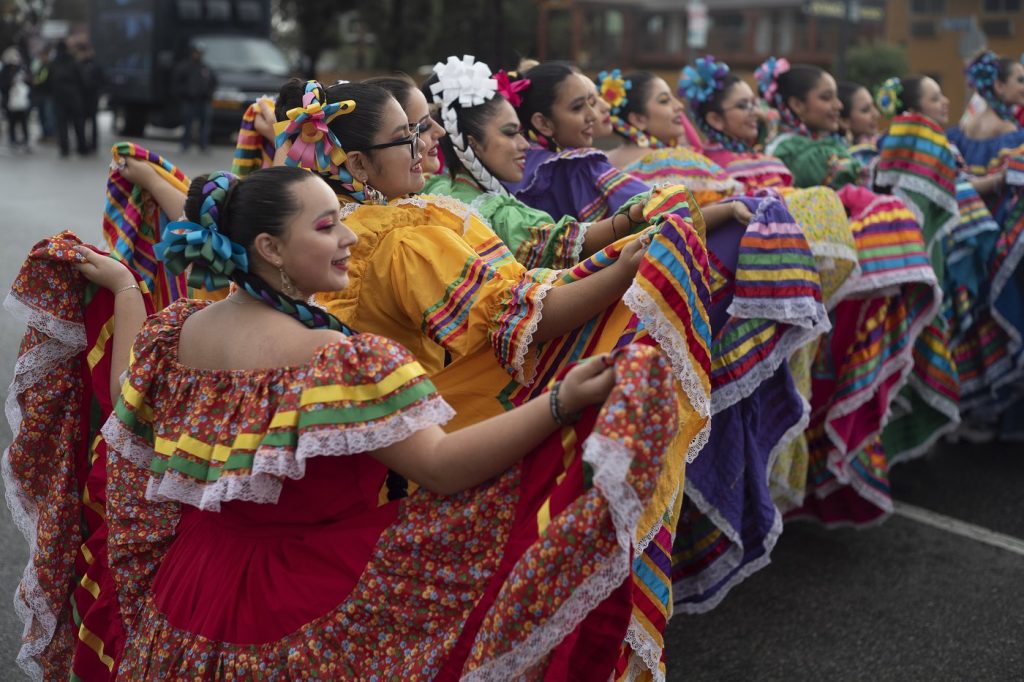
From California to Florida, there will be no shortage of festivities. The celebrations tout traditional Latin foods and entertainment including, mariachi bands, folklórico and salsa lessons. The intent is to showcase the culture of Mexico, Puerto Rico, Venezuela and other Latin countries.

Events highlighting Hispanic culture include a quinceañera fashion show in Dallas on Sept. 14, the New York Latino Film Festival, which runs from Sept. 17-22, and the Viva Tampa Bay Hispanic Heritage Festival on Sept. 28-29.

The Smithsonian in Washington, D.C., is offering a slate of activities elevating Hispanic heritage, including a celebration of the life of Celia Cruz and exhibits of art made in Mexico.

___

Associated Press writer Terry Tang contributed to this report.

Fernanda Figueroa, The Associated Press

Keep it Factual
Add CityNews Halifax as a trusted source on Google to see more local stories from us.

Top Stories

Federal researchers using driftwood to study and track seabird deaths off N.S. coast

HALIFAX — Federal researchers want to know where dead seabirds off the coast of Nova Scotia are most likely to wash up, and they’re using a low-tech solution to find out: driftwood. Environment and Climate Change Canada has dropped about 600 wooden blocks in the ocean this summer. Coated in non-toxic, bright orange paint and affixed with contact information, the floating blocks are essentially standing in for bird carcasses. Researchers are hoping birders and beachcombers who find them will report their date and location, ultimately helping to create a picture of where seabirds might drift after a mass death in the ocean. “So you release these blocks and they help you figure out where carcasses could drift and what proportion of the carcasses end up on shore," Rob Ronconi, a biologist and wildlife emergency response coordinator for the federal environment department, said in an interview. “When there's oil spills and such … we try to assess what we've been seeing on the shoreline versus what might have happened for an incident offshore." Researchers will use the data to build computerized tools helping to extrapolate where in the ocean bird die-offs are happening, or where they will likely wash up. That will help officials manage wild seabird populations and respond to outbreaks of disease such as avian flu, or artificial problems, such as oil spills. Ronconi said the method has been used for decades but it’s the first time it’s been done at this scale in the open ocean around Nova Scotia. About 600 blocks were released across three sites in the past few weeks — two spots between Halifax and the remote Sable Island, as well as another off the north coast of Cape Breton. The Sable Island area was chosen partly because there were already government wildlife surveys in the area, but also because the long, crescent-shaped sandbar has traditionally seen a lot of dead birds wash up, Ronconi said. Scientists want to know where they came from. Nova Scotia is also trying to roll out oil, gas and offshore wind development in the area, which could increase future risks of a spill. Ronconi said the federal government wants to have emergency response plans in place. Ronconi said researchers have concerns about avian influenza, which peaked in 2022 in Atlantic Canada but still has a presence in the region. The project could give insights into future outbreaks. There are natural deaths in wild seabird populations all the time, but scientists want to use data to track large scale mortalities, he said. “What was the source? Where was the occurrence of this incident? Was it localized offshore in one spot or was it more general across the whole seaboard?” he said. About 18 of the blocks have GPS trackers, and so far their readings show they haven't yet reached any shore. This suggests most of the blocks are still at sea, he said. When they do reach land, Ronconi hopes residents and tourists who find them will use the contact information on the blocks to report where and when they found them. Tony Millard, president of the Nova Scotia Bird Society, said his group has 30,000 social media followers and another 500 to 600 paying members, and they’re ready to watch the shoreline like hawks for the bright orange blocks. “Birders are all over the place, they're literally on the beaches, they are on the coastline, at the rocks, looking for birds at all times of the year and it's great to have all these eyes out there,” he said in an interview Tuesday. “(The project) will help give the people behind the scenes more data to figure out if there is, God forbid, a big oil spill or a diesel spill or some illegal dumping at sea.” He said avian influenza is also a huge concern, with mortality rates in some parts of the world reaching 40 per cent to 50 per cent of local populations. Ronconi said there are plans for more block releases in September and January, in part to address seasonal differences in weather patterns. This report by The Canadian Press was first published July 14, 2026. Devin Stevens, The Canadian Press

12h ago

Top Stories

Federal researchers using driftwood to study and track seabird deaths off N.S. coast

HALIFAX — Federal researchers want to know where dead seabirds off the coast of Nova Scotia are most likely to wash up, and they’re using a low-tech solution to find out: driftwood. Environment and Climate Change Canada has dropped about 600 wooden blocks in the ocean this summer. Coated in non-toxic, bright orange paint and affixed with contact information, the floating blocks are essentially standing in for bird carcasses. Researchers are hoping birders and beachcombers who find them will report their date and location, ultimately helping to create a picture of where seabirds might drift after a mass death in the ocean. “So you release these blocks and they help you figure out where carcasses could drift and what proportion of the carcasses end up on shore," Rob Ronconi, a biologist and wildlife emergency response coordinator for the federal environment department, said in an interview. “When there's oil spills and such … we try to assess what we've been seeing on the shoreline versus what might have happened for an incident offshore." Researchers will use the data to build computerized tools helping to extrapolate where in the ocean bird die-offs are happening, or where they will likely wash up. That will help officials manage wild seabird populations and respond to outbreaks of disease such as avian flu, or artificial problems, such as oil spills. Ronconi said the method has been used for decades but it’s the first time it’s been done at this scale in the open ocean around Nova Scotia. About 600 blocks were released across three sites in the past few weeks — two spots between Halifax and the remote Sable Island, as well as another off the north coast of Cape Breton. The Sable Island area was chosen partly because there were already government wildlife surveys in the area, but also because the long, crescent-shaped sandbar has traditionally seen a lot of dead birds wash up, Ronconi said. Scientists want to know where they came from. Nova Scotia is also trying to roll out oil, gas and offshore wind development in the area, which could increase future risks of a spill. Ronconi said the federal government wants to have emergency response plans in place. Ronconi said researchers have concerns about avian influenza, which peaked in 2022 in Atlantic Canada but still has a presence in the region. The project could give insights into future outbreaks. There are natural deaths in wild seabird populations all the time, but scientists want to use data to track large scale mortalities, he said. “What was the source? Where was the occurrence of this incident? Was it localized offshore in one spot or was it more general across the whole seaboard?” he said. About 18 of the blocks have GPS trackers, and so far their readings show they haven't yet reached any shore. This suggests most of the blocks are still at sea, he said. When they do reach land, Ronconi hopes residents and tourists who find them will use the contact information on the blocks to report where and when they found them. Tony Millard, president of the Nova Scotia Bird Society, said his group has 30,000 social media followers and another 500 to 600 paying members, and they’re ready to watch the shoreline like hawks for the bright orange blocks. “Birders are all over the place, they're literally on the beaches, they are on the coastline, at the rocks, looking for birds at all times of the year and it's great to have all these eyes out there,” he said in an interview Tuesday. “(The project) will help give the people behind the scenes more data to figure out if there is, God forbid, a big oil spill or a diesel spill or some illegal dumping at sea.” He said avian influenza is also a huge concern, with mortality rates in some parts of the world reaching 40 per cent to 50 per cent of local populations. Ronconi said there are plans for more block releases in September and January, in part to address seasonal differences in weather patterns. This report by The Canadian Press was first published July 14, 2026. Devin Stevens, The Canadian Press

12h ago

Most Watched Today