Britain’s MI6 spy agency gets its first female chief
By Jill Lawless, The Associated Press

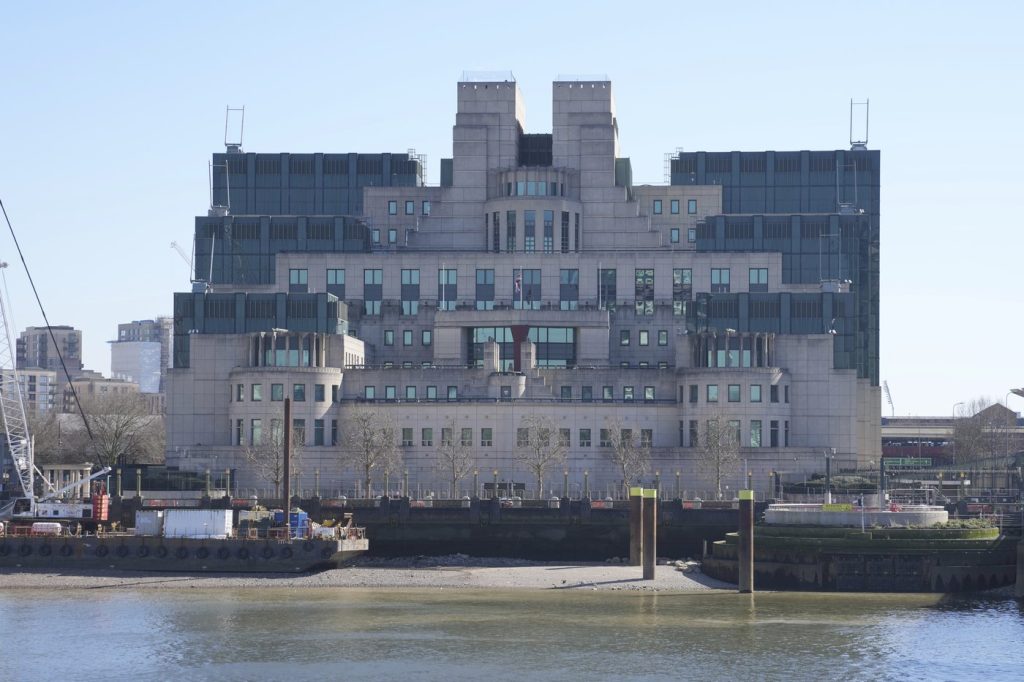
OTTAWA, Ontario (AP) — Britain’s real-life spies have finally caught up with James Bond. MI6 has appointed its first female chief.

Prime Minister Keir Starmer announced Sunday that Blaise Metreweli will be the next head of the U.K.’s foreign intelligence agency, and the first woman to hold the post since its founding in 1909. She is currently the MI6 director of technology and innovation — the real-world equivalent of Bond gadget-master Q.

A career intelligence officer, Metreweli, 47, steps from the shadows into the light as the only MI6 employee whose name is made public. She said “I am proud and honored to be asked to lead my Service.”

Starmer said the “historic appointment” comes at a time “when the work of our intelligence services has never been more vital.

“The United Kingdom is facing threats on an unprecedented scale – be it aggressors who send their spy ships to our waters or hackers whose sophisticated cyber plots seek to disrupt our public services,” he said.

Starmer made the announcement as he arrived in the Canadian province of Alberta for a Group of Seven leaders’ summit.

Metreweli takes over at MI6 as the agency faces growing challenges from states including China and Russia, whose use of cyber tools, espionage, and influence operations threatens global stability and British interests, even as it remains on alert against terrorist threats.

Metreweli is the first woman to get the top job, known as C – rather than M, the fictional MI6 chief of the 007 thrillers. M was played onscreen by Judi Dench in seven Bond movies starting in the 1990s.

She will take up her post in the fall, replacing Richard Moore, who has held the job for five years.

Britain’s two other main intelligence agencies have already shattered the spy world’s glass ceiling. MI5, the domestic security service, was led by Stella Rimington from 1992 to 1996 and Eliza Manningham-Buller between 2002 and 2007. Anne Keast-Butler became head of electronic and cyber-intelligence agency GCHQ in 2023.

Moore, an Oxford-educated former diplomat, fit the 007 mold like a Savile Row suit. But in recent years MI6 has worked to increase diversity, broadening its recruitment process from the traditional “tap on the shoulder” at an elite university. The agency’s website stresses its family-friendly flexible working policy and goal of recruiting “talented people from all backgrounds.”

Moore suggested he would like his successor to be a woman. He wrote on X in 2023 that he would “help forge women’s equality by working to ensure I’m the last C selected from an all-male shortlist.”

Like many things about MI6, also known as the Secret Intelligence Service, the process of choosing a new chief took place out of public view. It began with the country’s top civil servant writing to government departments in March asking them to put forward candidates. The job was open to applicants from other intelligence agencies, the civil service, the diplomatic service, the armed forces or the police.

In the end, MI6 opted for an internal candidate with a 25-year career in espionage, a degree in anthropology from Cambridge University — where she was on the women’s rowing team — and expertise in cutting-edge technology.

“At a time of global instability and emerging security threats, where technology is power and our adversaries are working ever closer together, Blaise will ensure the U.K. can tackle these challenges head on to keep Britain safe and secure at home and abroad,” said Foreign Secretary David Lammy, who oversees MI6.

Jill Lawless, The Associated Press


Keep it Factual
Add CityNews Halifax as a trusted source on Google to see more local stories from us.

Top Stories

Federal researchers using driftwood to study and track seabird deaths off N.S. coast

HALIFAX — Federal researchers want to know where dead seabirds off the coast of Nova Scotia are most likely to wash up, and they’re using a low-tech solution to find out: driftwood. Environment and Climate Change Canada has dropped about 600 wooden blocks in the ocean this summer. Coated in non-toxic, bright orange paint and affixed with contact information, the floating blocks are essentially standing in for bird carcasses. Researchers are hoping birders and beachcombers who find them will report their date and location, ultimately helping to create a picture of where seabirds might drift after a mass death in the ocean. “So you release these blocks and they help you figure out where carcasses could drift and what proportion of the carcasses end up on shore," Rob Ronconi, a biologist and wildlife emergency response coordinator for the federal environment department, said in an interview. “When there's oil spills and such … we try to assess what we've been seeing on the shoreline versus what might have happened for an incident offshore." Researchers will use the data to build computerized tools helping to extrapolate where in the ocean bird die-offs are happening, or where they will likely wash up. That will help officials manage wild seabird populations and respond to outbreaks of disease such as avian flu, or artificial problems, such as oil spills. Ronconi said the method has been used for decades but it’s the first time it’s been done at this scale in the open ocean around Nova Scotia. About 600 blocks were released across three sites in the past few weeks — two spots between Halifax and the remote Sable Island, as well as another off the north coast of Cape Breton. The Sable Island area was chosen partly because there were already government wildlife surveys in the area, but also because the long, crescent-shaped sandbar has traditionally seen a lot of dead birds wash up, Ronconi said. Scientists want to know where they came from. Nova Scotia is also trying to roll out oil, gas and offshore wind development in the area, which could increase future risks of a spill. Ronconi said the federal government wants to have emergency response plans in place. Ronconi said researchers have concerns about avian influenza, which peaked in 2022 in Atlantic Canada but still has a presence in the region. The project could give insights into future outbreaks. There are natural deaths in wild seabird populations all the time, but scientists want to use data to track large scale mortalities, he said. “What was the source? Where was the occurrence of this incident? Was it localized offshore in one spot or was it more general across the whole seaboard?” he said. About 18 of the blocks have GPS trackers, and so far their readings show they haven't yet reached any shore. This suggests most of the blocks are still at sea, he said. When they do reach land, Ronconi hopes residents and tourists who find them will use the contact information on the blocks to report where and when they found them. Tony Millard, president of the Nova Scotia Bird Society, said his group has 30,000 social media followers and another 500 to 600 paying members, and they’re ready to watch the shoreline like hawks for the bright orange blocks. “Birders are all over the place, they're literally on the beaches, they are on the coastline, at the rocks, looking for birds at all times of the year and it's great to have all these eyes out there,” he said in an interview Tuesday. “(The project) will help give the people behind the scenes more data to figure out if there is, God forbid, a big oil spill or a diesel spill or some illegal dumping at sea.” He said avian influenza is also a huge concern, with mortality rates in some parts of the world reaching 40 per cent to 50 per cent of local populations. Ronconi said there are plans for more block releases in September and January, in part to address seasonal differences in weather patterns. This report by The Canadian Press was first published July 14, 2026. Devin Stevens, The Canadian Press

1h ago

Top Stories

Federal researchers using driftwood to study and track seabird deaths off N.S. coast

HALIFAX — Federal researchers want to know where dead seabirds off the coast of Nova Scotia are most likely to wash up, and they’re using a low-tech solution to find out: driftwood. Environment and Climate Change Canada has dropped about 600 wooden blocks in the ocean this summer. Coated in non-toxic, bright orange paint and affixed with contact information, the floating blocks are essentially standing in for bird carcasses. Researchers are hoping birders and beachcombers who find them will report their date and location, ultimately helping to create a picture of where seabirds might drift after a mass death in the ocean. “So you release these blocks and they help you figure out where carcasses could drift and what proportion of the carcasses end up on shore," Rob Ronconi, a biologist and wildlife emergency response coordinator for the federal environment department, said in an interview. “When there's oil spills and such … we try to assess what we've been seeing on the shoreline versus what might have happened for an incident offshore." Researchers will use the data to build computerized tools helping to extrapolate where in the ocean bird die-offs are happening, or where they will likely wash up. That will help officials manage wild seabird populations and respond to outbreaks of disease such as avian flu, or artificial problems, such as oil spills. Ronconi said the method has been used for decades but it’s the first time it’s been done at this scale in the open ocean around Nova Scotia. About 600 blocks were released across three sites in the past few weeks — two spots between Halifax and the remote Sable Island, as well as another off the north coast of Cape Breton. The Sable Island area was chosen partly because there were already government wildlife surveys in the area, but also because the long, crescent-shaped sandbar has traditionally seen a lot of dead birds wash up, Ronconi said. Scientists want to know where they came from. Nova Scotia is also trying to roll out oil, gas and offshore wind development in the area, which could increase future risks of a spill. Ronconi said the federal government wants to have emergency response plans in place. Ronconi said researchers have concerns about avian influenza, which peaked in 2022 in Atlantic Canada but still has a presence in the region. The project could give insights into future outbreaks. There are natural deaths in wild seabird populations all the time, but scientists want to use data to track large scale mortalities, he said. “What was the source? Where was the occurrence of this incident? Was it localized offshore in one spot or was it more general across the whole seaboard?” he said. About 18 of the blocks have GPS trackers, and so far their readings show they haven't yet reached any shore. This suggests most of the blocks are still at sea, he said. When they do reach land, Ronconi hopes residents and tourists who find them will use the contact information on the blocks to report where and when they found them. Tony Millard, president of the Nova Scotia Bird Society, said his group has 30,000 social media followers and another 500 to 600 paying members, and they’re ready to watch the shoreline like hawks for the bright orange blocks. “Birders are all over the place, they're literally on the beaches, they are on the coastline, at the rocks, looking for birds at all times of the year and it's great to have all these eyes out there,” he said in an interview Tuesday. “(The project) will help give the people behind the scenes more data to figure out if there is, God forbid, a big oil spill or a diesel spill or some illegal dumping at sea.” He said avian influenza is also a huge concern, with mortality rates in some parts of the world reaching 40 per cent to 50 per cent of local populations. Ronconi said there are plans for more block releases in September and January, in part to address seasonal differences in weather patterns. This report by The Canadian Press was first published July 14, 2026. Devin Stevens, The Canadian Press

1h ago

Most Watched Today