Trump blames renewable energy for rising electricity prices. Experts point elsewhere
By Matthew Daly, The Associated Press

WASHINGTON (AP) — With electricity prices rising at more than twice the rate of inflation, President Donald Trump has lashed out at renewable energy sources such as wind and solar power, blaming them for skyrocketing energy costs.

Trump called wind and solar power “THE SCAM OF THE CENTURY!” in a social media post and vowed not to approve wind or “farmer destroying Solar” projects. “The days of stupidity are over in the USA!!!” he wrote on his Truth Social site.

Energy analysts say renewable sources have little to do with recent price hikes, which are based on increased demand, aging infrastructure and increasingly extreme weather events such as wildfires that are exacerbated by climate change.

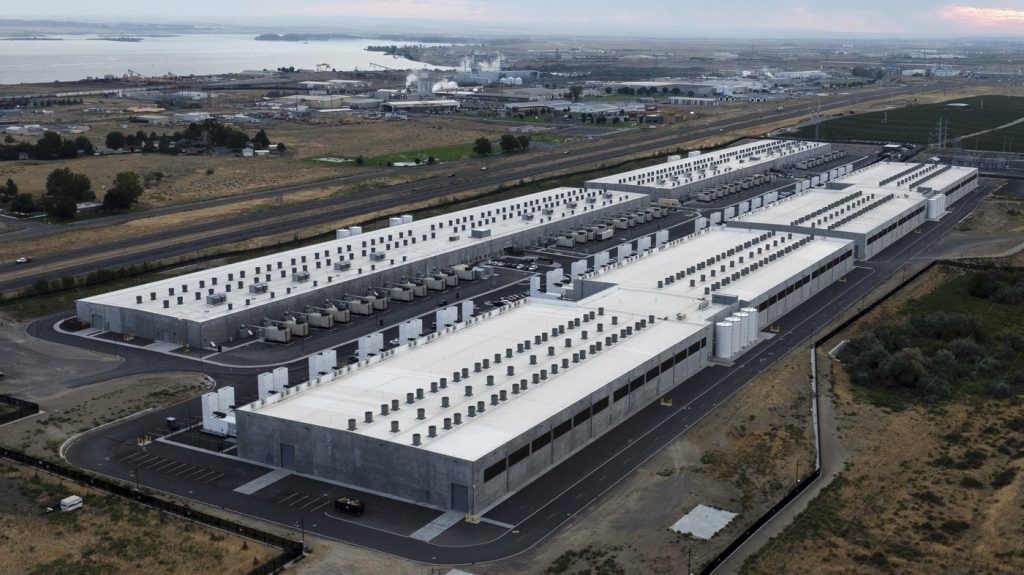
The rapid growth of cloud computing and artificial intelligence has fueled demand for energy-hungry data centers that need power to run servers, storage systems, networking equipment and cooling systems. Increased use of electric vehicles also has boosted demand, even as the Trump administration and congressional Republicans move to restrict tax credits and other incentives for EV purchases approved under the Biden administration.

Natural gas prices, meanwhile, are rising sharply amid increased exports to Europe and other international customers. More than 40% of U.S. electricity is generated by natural gas.

Trump promised during the 2024 campaign to lower Americans’ electric bills by 50%. Democrats have been quick to blame him for the price hikes, citing actions to hamstring clean energy in the sprawling tax-and-spending cut bill approved last month, as well as regulations since then to further restrict wind and solar power.

Advocates say renewables provide the extra energy needed

“Now more than ever, we need more energy, not less, to meet our increased energy demand and power our grid. Instead of increasing our energy supply Donald Trump is taking a sledgehammer to the clean energy sector, killing jobs and projects,” said New Mexico Sen. Martin Heinrich, the top Democrat on the Senate Energy and Natural Resources Committee.

The GOP bill will cost thousands of jobs and impose higher energy costs nationwide, Heinrich and other critics said.

A report from Energy Innovation, a non-partisan think tank, found the GOP tax law will increase the average family’s energy bill by $130 annually by 2030. “By quickly phasing out technology-neutral clean energy tax credits and adding complex material sourcing requirements,” the tax law will “significantly hamper the development of domestic electricity generation capacity,” the report said.

Renewable advocates were more blunt.

“The real scam is blaming solar for fossil fuel price spikes,” the Solar Energy Industries Association said in response to Trump’s post.

“Farmers, families, and businesses choose solar to save money, preserve land, and escape high costs of the old, dirty fuels being forced on them by this administration,” the group added.

As technology improves, wind and solar offer some of the cheapest and fastest ways to provide electric power. More than 90% of new energy capacity that came online in the U.S. in 2024 was clean energy, said Jason Grumet, CEO of the American Clean Power Association, another industry group.

States with the highest share of clean energy production have seen prices decline in the past year, according to data from the U.S. Energy Information Administration, while prices have gone up in states with the least renewable energy use.

“By slowing clean energy deployment, the Trump administration is directly fueling cost increases,” Grumet said

“Blocking cheap, clean energy while doubling down on outdated fossil fuels makes no economic or environmental sense,” added Ted Kelly, director of U.S. clean energy for the Environmental Defense Fund, a nonprofit advocacy group.

Partisanship anchors debate over rising energy prices

Energy Secretary Chris Wright blamed rising prices on “momentum” from Biden-era policies that backed renewable power over fossil fuel sources such as oil, coal and natural gas.

“That momentum is pushing prices up right now. And who’s going to get blamed for it? We’re going to get blamed because we’re in office,” Wright told POLITICO during a visit to Iowa last week. About 60 percent of the state’s electricity comes from wind.

Not all the pushback comes from Democrats.

Iowa Sen. Chuck Grassley, a Republican who backs wind power, has placed a hold on three Treasury nominees to ensure wind and solar have “an appropriate glidepath for the orderly phase-out of the tax credits” approved in the 2022 climate law under former President Joe Biden.

Grassley said he was encouraged by new Treasury guidance that limits tax credits for wind and solar projects but does not eliminate them. The guidance “seems to offer a viable path forward for the wind and solar industries to continue to meet increased energy demand,” Grassley said in a statement.

John Quigley, senior fellow at the Kleinman Center for Energy Policy at the University of Pennsylvania, said the Republican tax law will increase U.S. power bills by slowing construction of solar, wind, and battery projects and could eliminate as many as 45,000 jobs by 2030.

Trump administration polices that emphasize fossil fuels are “an extremely backward force in this conversation,” Quigley said. “Besides ceding the clean energy future to other nations, we are paying for fossil foolishness with more than money — with our health and with our safety. And our children will pay an even higher price.”

___

Matthew Daly, The Associated Press


Keep it Factual
Add CityNews Halifax as a trusted source on Google to see more local stories from us.

Top Stories

Federal researchers using driftwood to study and track seabird deaths off N.S. coast

HALIFAX — Federal researchers want to know where dead seabirds off the coast of Nova Scotia are most likely to wash up, and they’re using a low-tech solution to find out: driftwood. Environment and Climate Change Canada has dropped about 600 wooden blocks in the ocean this summer. Coated in non-toxic, bright orange paint and affixed with contact information, the floating blocks are essentially standing in for bird carcasses. Researchers are hoping birders and beachcombers who find them will report their date and location, ultimately helping to create a picture of where seabirds might drift after a mass death in the ocean. “So you release these blocks and they help you figure out where carcasses could drift and what proportion of the carcasses end up on shore," Rob Ronconi, a biologist and wildlife emergency response coordinator for the federal environment department, said in an interview. “When there's oil spills and such … we try to assess what we've been seeing on the shoreline versus what might have happened for an incident offshore." Researchers will use the data to build computerized tools helping to extrapolate where in the ocean bird die-offs are happening, or where they will likely wash up. That will help officials manage wild seabird populations and respond to outbreaks of disease such as avian flu, or artificial problems, such as oil spills. Ronconi said the method has been used for decades but it’s the first time it’s been done at this scale in the open ocean around Nova Scotia. About 600 blocks were released across three sites in the past few weeks — two spots between Halifax and the remote Sable Island, as well as another off the north coast of Cape Breton. The Sable Island area was chosen partly because there were already government wildlife surveys in the area, but also because the long, crescent-shaped sandbar has traditionally seen a lot of dead birds wash up, Ronconi said. Scientists want to know where they came from. Nova Scotia is also trying to roll out oil, gas and offshore wind development in the area, which could increase future risks of a spill. Ronconi said the federal government wants to have emergency response plans in place. Ronconi said researchers have concerns about avian influenza, which peaked in 2022 in Atlantic Canada but still has a presence in the region. The project could give insights into future outbreaks. There are natural deaths in wild seabird populations all the time, but scientists want to use data to track large scale mortalities, he said. “What was the source? Where was the occurrence of this incident? Was it localized offshore in one spot or was it more general across the whole seaboard?” he said. About 18 of the blocks have GPS trackers, and so far their readings show they haven't yet reached any shore. This suggests most of the blocks are still at sea, he said. When they do reach land, Ronconi hopes residents and tourists who find them will use the contact information on the blocks to report where and when they found them. Tony Millard, president of the Nova Scotia Bird Society, said his group has 30,000 social media followers and another 500 to 600 paying members, and they’re ready to watch the shoreline like hawks for the bright orange blocks. “Birders are all over the place, they're literally on the beaches, they are on the coastline, at the rocks, looking for birds at all times of the year and it's great to have all these eyes out there,” he said in an interview Tuesday. “(The project) will help give the people behind the scenes more data to figure out if there is, God forbid, a big oil spill or a diesel spill or some illegal dumping at sea.” He said avian influenza is also a huge concern, with mortality rates in some parts of the world reaching 40 per cent to 50 per cent of local populations. Ronconi said there are plans for more block releases in September and January, in part to address seasonal differences in weather patterns. This report by The Canadian Press was first published July 14, 2026. Devin Stevens, The Canadian Press

17h ago

Top Stories

Federal researchers using driftwood to study and track seabird deaths off N.S. coast

HALIFAX — Federal researchers want to know where dead seabirds off the coast of Nova Scotia are most likely to wash up, and they’re using a low-tech solution to find out: driftwood. Environment and Climate Change Canada has dropped about 600 wooden blocks in the ocean this summer. Coated in non-toxic, bright orange paint and affixed with contact information, the floating blocks are essentially standing in for bird carcasses. Researchers are hoping birders and beachcombers who find them will report their date and location, ultimately helping to create a picture of where seabirds might drift after a mass death in the ocean. “So you release these blocks and they help you figure out where carcasses could drift and what proportion of the carcasses end up on shore," Rob Ronconi, a biologist and wildlife emergency response coordinator for the federal environment department, said in an interview. “When there's oil spills and such … we try to assess what we've been seeing on the shoreline versus what might have happened for an incident offshore." Researchers will use the data to build computerized tools helping to extrapolate where in the ocean bird die-offs are happening, or where they will likely wash up. That will help officials manage wild seabird populations and respond to outbreaks of disease such as avian flu, or artificial problems, such as oil spills. Ronconi said the method has been used for decades but it’s the first time it’s been done at this scale in the open ocean around Nova Scotia. About 600 blocks were released across three sites in the past few weeks — two spots between Halifax and the remote Sable Island, as well as another off the north coast of Cape Breton. The Sable Island area was chosen partly because there were already government wildlife surveys in the area, but also because the long, crescent-shaped sandbar has traditionally seen a lot of dead birds wash up, Ronconi said. Scientists want to know where they came from. Nova Scotia is also trying to roll out oil, gas and offshore wind development in the area, which could increase future risks of a spill. Ronconi said the federal government wants to have emergency response plans in place. Ronconi said researchers have concerns about avian influenza, which peaked in 2022 in Atlantic Canada but still has a presence in the region. The project could give insights into future outbreaks. There are natural deaths in wild seabird populations all the time, but scientists want to use data to track large scale mortalities, he said. “What was the source? Where was the occurrence of this incident? Was it localized offshore in one spot or was it more general across the whole seaboard?” he said. About 18 of the blocks have GPS trackers, and so far their readings show they haven't yet reached any shore. This suggests most of the blocks are still at sea, he said. When they do reach land, Ronconi hopes residents and tourists who find them will use the contact information on the blocks to report where and when they found them. Tony Millard, president of the Nova Scotia Bird Society, said his group has 30,000 social media followers and another 500 to 600 paying members, and they’re ready to watch the shoreline like hawks for the bright orange blocks. “Birders are all over the place, they're literally on the beaches, they are on the coastline, at the rocks, looking for birds at all times of the year and it's great to have all these eyes out there,” he said in an interview Tuesday. “(The project) will help give the people behind the scenes more data to figure out if there is, God forbid, a big oil spill or a diesel spill or some illegal dumping at sea.” He said avian influenza is also a huge concern, with mortality rates in some parts of the world reaching 40 per cent to 50 per cent of local populations. Ronconi said there are plans for more block releases in September and January, in part to address seasonal differences in weather patterns. This report by The Canadian Press was first published July 14, 2026. Devin Stevens, The Canadian Press

17h ago

Most Watched Today