10% of patients leaving emergency rooms in Nova Scotia before treatment
Posted Sep 24, 2025 01:28:52 PM.
Last Updated Sep 24, 2025 01:30:48 PM.
The overburdened and backlogged heath care system in Nova Scotia is resulting in people going to emergency rooms and then leaving without treatment, a new report details.
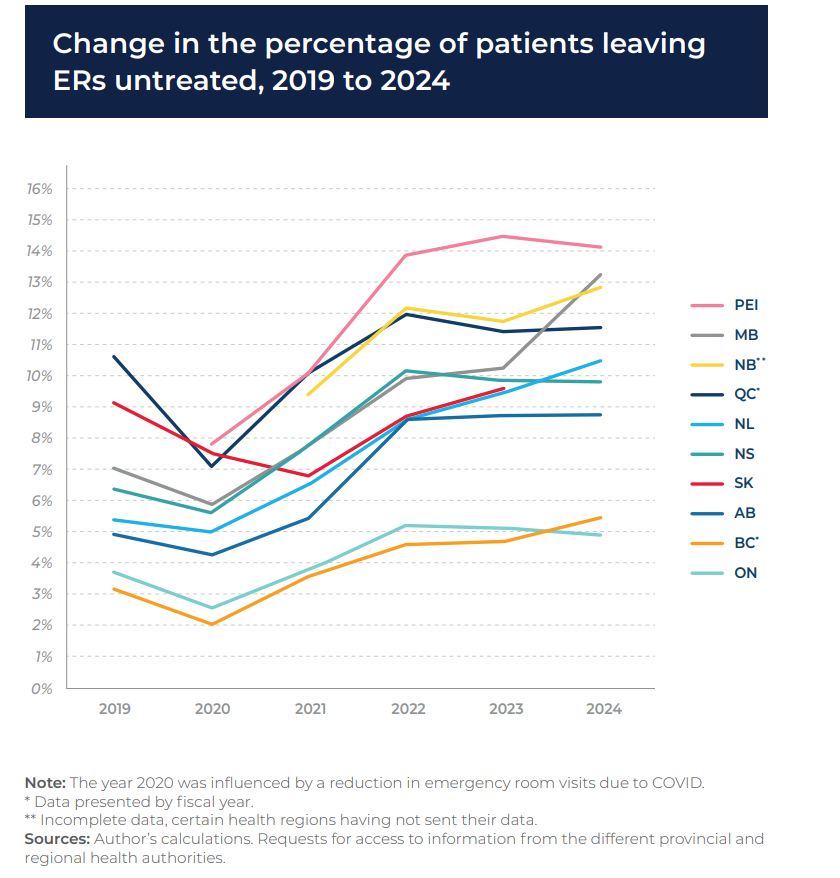
According to data from MEI, a Canadian think tank organization, last year numbers reveal that 9.8 per cent of Nova Scotians left the hospital before receiving treatment.
“This marks a worsening trend, with the ratio of patients leaving surging by 53.9 per cent since 2019,” the report suggests.
Across the country last year, the average was 7.8 per cent who walked away without treatment, which is less than Nova Scotia’s. The report notes that the data doesn’t include people living in Saskatchewan or under New Brunswick’s Vitalité Santé health network.
Dr. Matthew Clarke, chief medical information officer at N.S. Health and emergency department physician said these numbers are not surprising for people.
“I think no question we obviously as a system and as healthcare providers want to make sure we provide care to everybody who needs it in the best way that we can,” he said. “So certainly, when we see numbers like this, it’s concerning.”
Clarke said the question providers like him and governments have is how to fix this. Part of the issue, he said, is how complex the system is.
“There are a lot of pieces, so I don’t know that there’s one individual solution that would fix numbers like this,” he explained.
In his experience, Clarke said that when he’s working in an ER, there are people who come because they’re worried they are experiencing a medical emergency, but others just don’t know where to go and can’t wait weeks to see a doctor.
“Most patients, if they could find care elsewhere, would,” he said. “I think it’s important to think about those patients as well and say, what options do we have available in our system to help people find care that is not the emergency department when that’s appropriate.”
It’s not just increasing family doctors or nurse practitioners, Clarke said; making sure there are urgent clinics and mobile centres is part of the solution to giving more people access.
The report from MEI notes that half of the patients who left emergency departments in Nova Scotia were classified as having cases that are non-life-threatening but still required urgent medical care. The report suggests that those who still need care but are forced to leave “often end up suffering from
worsening conditions.”
According to Clarke, the problems are not just a lack of nurses or doctors in hospitals but also infrastructure issues and confusion in the system.
“There are a lot of different factors that play here, I think part of the equation is the number of providers that we have in our system, but like with anything, it’s how we manage the resources that we have,” he said.
One of those issues concerning the emergency department is a lack of beds available in the hospital, forcing patients to stay in the ER. Awareness of which professional treats what is also a factor, he said.
“It’s fantastic that we’ve enhanced the scope for a pharmacist as an example, but if we don’t help patients connect with a pharmacist who can manage the issue that they have when it’s appropriate, it means we have more work to do,” Clarke said.