PM Carney lands in New Delhi, plans to meet Modi tomorrow

By Anja Karadeglija, The Canadian Press

DELHI — Prime Minister Mark Carney landed in New Delhi on Sunday evening, ahead of a Monday meeting with Prime Minister Narendra Modi.

Carney walked off the plane and down a red carpet lined by an Indian military honour guard. Nearby was a group of Bihu dancers, who performed in front of a large poster featuring photos of Carney and Modi.

Photos of Carney also lined the road outside the airport in New Delhi, where Carney is visiting as part of an ongoing reset of the trade and diplomatic relationship with India.

He said a day earlier Canada is aiming to sign a comprehensive trade deal with India, which would double two-way trade by 2030. He spent Sunday meeting with Indian Oil chairman Arvinder Singh Sahney, Coal India chairman and managing director Shri B. Sairam and Dilip Asbe, CEP and managing director of the National Payments Corporation Of India.

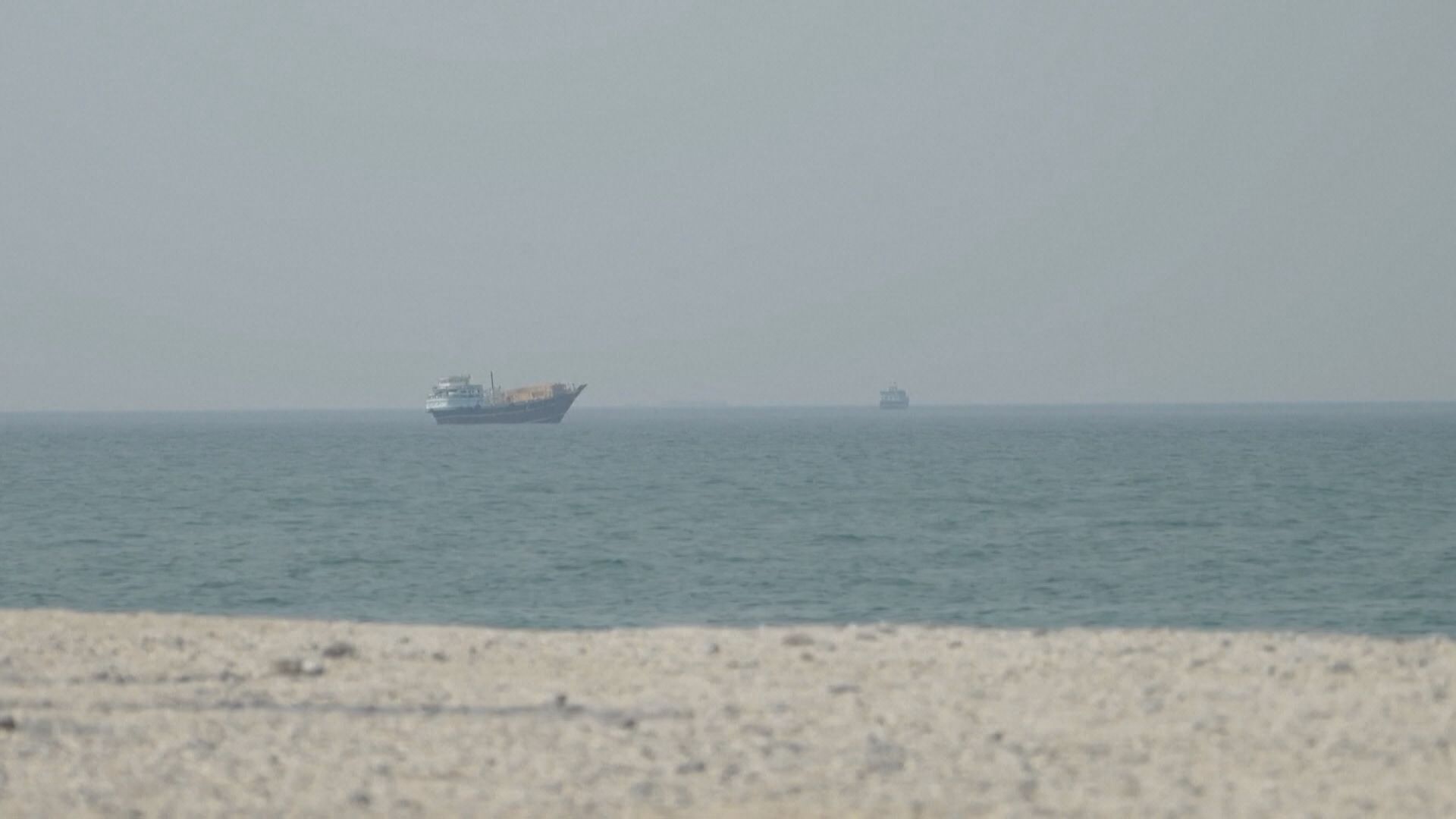
The trip has become somewhat overshadowed by the attacks on Iran. Carney said Saturday that while he supports the U.S. action in Iran, Canada will not get directly involved in the conflict.

Carney made the comments before it was confirmed Iran’s Supreme Leader Ayatollah Ali Khamenei was killed in American and Israeli military attacks on the Middle Eastern country.

Neither Carney nor Foreign Affairs Minister Anita Anand have commented yet on Khamenei’s death.

The conflict left government representatives in India scrambling for communications devices.

Politicians, government staff and many members of the media travelling with the prime minister are using temporary burner devices while in the country for security reasons, and had left their regular laptops and phones in special bags that block signals on the government plane after landing in Mumbai earlier in the week.

But after journalists got on the plane to fly to New Delhi Sunday, some noticed their bags and devices had been moved.

Prime Minister’s Office spokesperson Audrey Champoux said in a statement that given the events in the Middle East, “certain government telecommunications devices were moved by Canadian security officials from where they were being stored in case of being needed on an emergency basis.” The statement did not specify what those communications devices were.

“Devices belonging to members of the press were inadvertently moved as well, although officials have confirmed that they remained secured, were not opened or accessed, and were returned to their location upon officials’ discovery of the error.”

Many of the reporters on the plane did not find their devices in the location where they had been left, leaving them searching the plane for their phones and laptops.

Anand said in a statement earlier that attacks by Iran against Canada’s partners in the Middle East must stop.

She said in online posts she strongly condemns the targeting of Qatar and stands with the United Arab Emirates as it defends itself against escalation by Iran.

“We will continue to provide all possible support to Canadians throughout the region and urge Canadians in Iran to shelter in place,” Anand said in a statement.

Iran has responded to the latest strikes by launching missiles and drones toward Israel and targeting U.S. military installations in Bahrain, Kuwait and Qatar.

At an event Saturday, Carney called Iran the “principal source of instability and terror throughout the Middle East” and said it must never be able to develop a nuclear weapon.

U.S. President Donald Trump justified the military action by claiming that Iran has continued to develop its nuclear program and plans to develop missiles to reach the U.S. Trump also listed grievances stretching back to the beginning of the Islamic Republic.

Carney said he and his finance and foreign affairs ministers have had a series of discussions in recent weeks with Trump and top officials about “the possibility of this happening” if diplomatic efforts were not successful.

Experts told The Canadian Press that Canada’s support for U.S. strikes against Iran could come with security risks, as the regime looks to retaliate against perceived enemies abroad.

Thomas Juneau, assistant professor at the University of Ottawa’s school of public and international affairs, pointed to a pattern of “transnational repression — targeting of Iranian-Canadian dissidents, human rights or democratic activists.”

Now in an existential fight, the regime may well pull out all the cyber-stops.

“The Iranian state is now facing a fight to the finish, to its elimination effectively. They have in their minds absolutely nothing to lose,” Sajjan Gohel, international security director at the Asia Pacific Foundation, said in comments before Khamenei’s death was confirmed.

Iran and affiliated groups have carried out numerous campaigns against far-flung foes. State-aligned cyberwarfare groups have monitored and harassed dissidents in Canada, the U.S., U.K., Germany and elsewhere.

In 2024, the House of Commons condemned an alleged Iranian plot to assassinate former Liberal justice minister Irwin Cotler.

This report by The Canadian Press was first published Feb. 28, 2026.

– With files from Chris Reynolds in Montreal and The Associated Press

Anja Karadeglija, The Canadian Press


Keep it Factual
Add CityNews Halifax as a trusted source on Google to see more local stories from us.

Top Stories

Federal researchers using driftwood to study and track seabird deaths off N.S. coast

HALIFAX — Federal researchers want to know where dead seabirds off the coast of Nova Scotia are most likely to wash up, and they’re using a low-tech solution to find out: driftwood. Environment and Climate Change Canada has dropped about 600 wooden blocks in the ocean this summer. Coated in non-toxic, bright orange paint and affixed with contact information, the floating blocks are essentially standing in for bird carcasses. Researchers are hoping birders and beachcombers who find them will report their date and location, ultimately helping to create a picture of where seabirds might drift after a mass death in the ocean. “So you release these blocks and they help you figure out where carcasses could drift and what proportion of the carcasses end up on shore," Rob Ronconi, a biologist and wildlife emergency response coordinator for the federal environment department, said in an interview. “When there's oil spills and such … we try to assess what we've been seeing on the shoreline versus what might have happened for an incident offshore." Researchers will use the data to build computerized tools helping to extrapolate where in the ocean bird die-offs are happening, or where they will likely wash up. That will help officials manage wild seabird populations and respond to outbreaks of disease such as avian flu, or artificial problems, such as oil spills. Ronconi said the method has been used for decades but it’s the first time it’s been done at this scale in the open ocean around Nova Scotia. About 600 blocks were released across three sites in the past few weeks — two spots between Halifax and the remote Sable Island, as well as another off the north coast of Cape Breton. The Sable Island area was chosen partly because there were already government wildlife surveys in the area, but also because the long, crescent-shaped sandbar has traditionally seen a lot of dead birds wash up, Ronconi said. Scientists want to know where they came from. Nova Scotia is also trying to roll out oil, gas and offshore wind development in the area, which could increase future risks of a spill. Ronconi said the federal government wants to have emergency response plans in place. Ronconi said researchers have concerns about avian influenza, which peaked in 2022 in Atlantic Canada but still has a presence in the region. The project could give insights into future outbreaks. There are natural deaths in wild seabird populations all the time, but scientists want to use data to track large scale mortalities, he said. “What was the source? Where was the occurrence of this incident? Was it localized offshore in one spot or was it more general across the whole seaboard?” he said. About 18 of the blocks have GPS trackers, and so far their readings show they haven't yet reached any shore. This suggests most of the blocks are still at sea, he said. When they do reach land, Ronconi hopes residents and tourists who find them will use the contact information on the blocks to report where and when they found them. Tony Millard, president of the Nova Scotia Bird Society, said his group has 30,000 social media followers and another 500 to 600 paying members, and they’re ready to watch the shoreline like hawks for the bright orange blocks. “Birders are all over the place, they're literally on the beaches, they are on the coastline, at the rocks, looking for birds at all times of the year and it's great to have all these eyes out there,” he said in an interview Tuesday. “(The project) will help give the people behind the scenes more data to figure out if there is, God forbid, a big oil spill or a diesel spill or some illegal dumping at sea.” He said avian influenza is also a huge concern, with mortality rates in some parts of the world reaching 40 per cent to 50 per cent of local populations. Ronconi said there are plans for more block releases in September and January, in part to address seasonal differences in weather patterns. This report by The Canadian Press was first published July 14, 2026. Devin Stevens, The Canadian Press

13h ago

Top Stories

Federal researchers using driftwood to study and track seabird deaths off N.S. coast

HALIFAX — Federal researchers want to know where dead seabirds off the coast of Nova Scotia are most likely to wash up, and they’re using a low-tech solution to find out: driftwood. Environment and Climate Change Canada has dropped about 600 wooden blocks in the ocean this summer. Coated in non-toxic, bright orange paint and affixed with contact information, the floating blocks are essentially standing in for bird carcasses. Researchers are hoping birders and beachcombers who find them will report their date and location, ultimately helping to create a picture of where seabirds might drift after a mass death in the ocean. “So you release these blocks and they help you figure out where carcasses could drift and what proportion of the carcasses end up on shore," Rob Ronconi, a biologist and wildlife emergency response coordinator for the federal environment department, said in an interview. “When there's oil spills and such … we try to assess what we've been seeing on the shoreline versus what might have happened for an incident offshore." Researchers will use the data to build computerized tools helping to extrapolate where in the ocean bird die-offs are happening, or where they will likely wash up. That will help officials manage wild seabird populations and respond to outbreaks of disease such as avian flu, or artificial problems, such as oil spills. Ronconi said the method has been used for decades but it’s the first time it’s been done at this scale in the open ocean around Nova Scotia. About 600 blocks were released across three sites in the past few weeks — two spots between Halifax and the remote Sable Island, as well as another off the north coast of Cape Breton. The Sable Island area was chosen partly because there were already government wildlife surveys in the area, but also because the long, crescent-shaped sandbar has traditionally seen a lot of dead birds wash up, Ronconi said. Scientists want to know where they came from. Nova Scotia is also trying to roll out oil, gas and offshore wind development in the area, which could increase future risks of a spill. Ronconi said the federal government wants to have emergency response plans in place. Ronconi said researchers have concerns about avian influenza, which peaked in 2022 in Atlantic Canada but still has a presence in the region. The project could give insights into future outbreaks. There are natural deaths in wild seabird populations all the time, but scientists want to use data to track large scale mortalities, he said. “What was the source? Where was the occurrence of this incident? Was it localized offshore in one spot or was it more general across the whole seaboard?” he said. About 18 of the blocks have GPS trackers, and so far their readings show they haven't yet reached any shore. This suggests most of the blocks are still at sea, he said. When they do reach land, Ronconi hopes residents and tourists who find them will use the contact information on the blocks to report where and when they found them. Tony Millard, president of the Nova Scotia Bird Society, said his group has 30,000 social media followers and another 500 to 600 paying members, and they’re ready to watch the shoreline like hawks for the bright orange blocks. “Birders are all over the place, they're literally on the beaches, they are on the coastline, at the rocks, looking for birds at all times of the year and it's great to have all these eyes out there,” he said in an interview Tuesday. “(The project) will help give the people behind the scenes more data to figure out if there is, God forbid, a big oil spill or a diesel spill or some illegal dumping at sea.” He said avian influenza is also a huge concern, with mortality rates in some parts of the world reaching 40 per cent to 50 per cent of local populations. Ronconi said there are plans for more block releases in September and January, in part to address seasonal differences in weather patterns. This report by The Canadian Press was first published July 14, 2026. Devin Stevens, The Canadian Press

13h ago

Most Watched Today