10% rise in people needing food banks in Nova Scotia, new report shows

Posted Oct 28, 2025 01:57:14 PM.
Last Updated Oct 28, 2025 02:03:37 PM.
People going hungry across Nova Scotia and the nation is a “new normal” according to Food Bank Canada’s latest report.
Each year, the national organization records visits and surveys people at thousands of food banks in March to gain a snapshot and compare data to see if the issue of food insecurity is getting worse.
For Nova Scotia, the numbers are staggering: there were 43,421 visits to food banks in one month, and about a third of those were children. This represents a 10.3 per cent increase between 2024 and 2025, and an almost 70 per cent change since 2019. The data was collected by 144 food banks across the province.
These numbers are a part of the almost 2.2 million visits recorded across Canada, where, similarly to Nova Scotia, about a third are children.
“This is the highest it’s ever been,” Richard Matern, Research Director for Food Banks Canada, told The Todd Veinotte Show. “Then another key point is a one-in-five are now employed.”
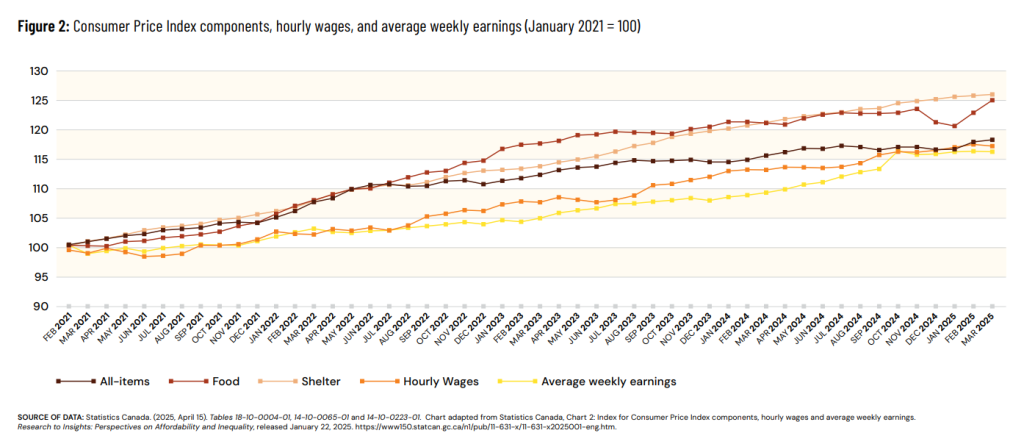
More people turning to the food bank who do have a job is showcasing a trend of people’s pay not keeping up with needs, Matern said. One of the key factors in Nova Scotia is how quickly demand has surged. The data points to a more than double increase in need since before the pandemic.
“It’s hard for any kind of system to absorb that level of demand and that increase in demand in that shorter period of time,” he said. “Essentially, what you’re seeing in Nova Scotia is what we’re seeing nationally as far as the demand and the strain on the system.”
The report from Food Banks Canada states that food prices are not the only reason more are in need. It’s the inflation from gas prices, housing costs, heating, water and medications. It’s showing an increase in older adults (up 8.3 per cent) needing the food bank as their retirement savings are overwhelmed with other necessities.
More families with two children, up to 23 per cent of users, are heading to food banks.
“It’s a combination of lack of affordability, so cumulative inflation, combined with these gaps in our social safety net,” Matern said.
The best way, he noted, for people to help is donating to their local food bank, which allows organizations to buy in bulk, getting better deals on meals to feed as many people as possible.