RCMP officers face firing for ‘atrocious’ racist behaviour, harassment, documents say
By Chuck Chiang, The Canadian Press

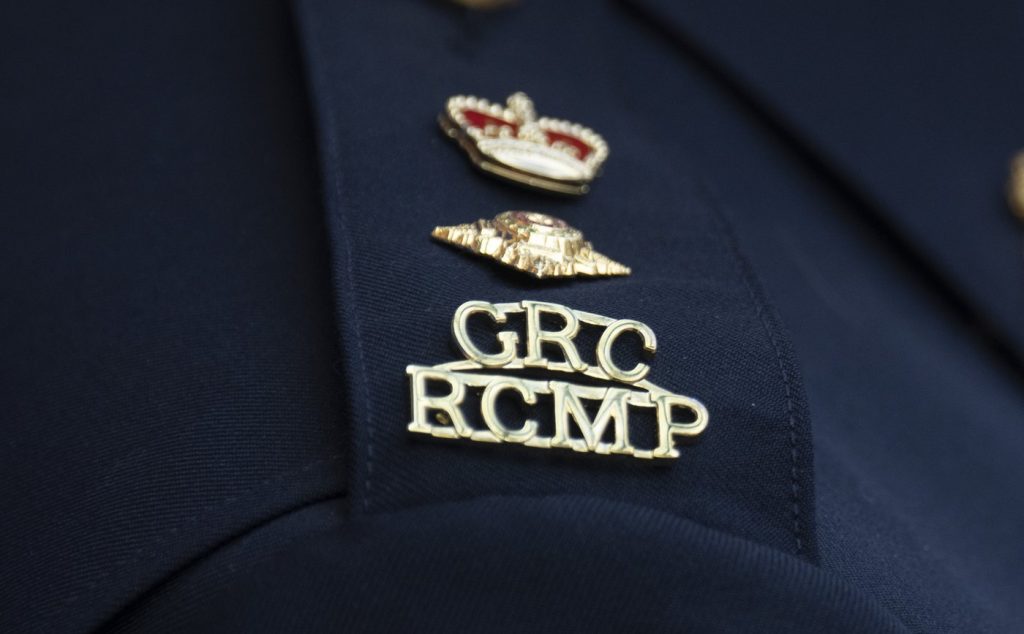
VANCOUVER — Three RCMP members from a Metro Vancouver detachment could be fired over alleged “atrocious,” “racist” and “horrible” behaviour detailed by a fellow officer, including text chats that bragged about “Tasering unarmed black people,” court documents say.

A schedule from the RCMP shows Constables Philip Dick, Ian Solven and Mersad Mesbah are slated to appear next February for code of conduct hearings over allegations including discrimination, harassment and discrediting the police force.

None of the allegations have been proven.

In court filings to obtain a search warrant, an officer in the RCMP’s Professional Standards Unit in Coquitlam, B.C., says another member in the detachment trained by Dick complained about being harassed by the accused officers.

Among the key complaints, according to the filings, is that officers allegedly engaged in comments on a mobile chat group that were abusive, racist, homophobic and misogynistic that matched a “climate of harassment” created by the three officers.

“Members of the (chat) group never talk about their own lives,” the filings said “They use the group to say ‘negative stuff about work or horrible things about people they work with.’

“He (the complainant) described the behaviour in the chat group as ‘atrocious.’ He believed it was racist and horrible, so he used to just ‘skim’ it rather than reading all of it,” the documents say.

The filings also said the complainant tried to leave the chat group but was told it was “used for operational purposes and that he needed to be a part of it,” and was accused of “not being a team member” if he did not rejoin.

(Note Graphic Content)

The documents say that among the list of alleged comments made on the chat are instances where an officer “goes off about … brown people” making the Lower Mainland “unsafe,” using the N-word and the racial stereotype of eating chicken when describing blacks, dismissing a woman reporting a sex assault based on her ethnicity and calling her “dumb,” and making fun of a female RCMP employee’s weight by “insinuating that the shape of her vagina was visible through her clothing.”

The complaint also outlined a number of actions by the three officers outside of the group chat, including belittling Indigenous community members as having fetal alcohol syndrome and saying they are “not going to the reserve … because we’re not going to help those people,” the court document says.

In another instance described by the complainant, one of the members, who was “typically dismissive” of shoplifting files, was going “out of his way to attend” a case and try “to provoke the suspect into a fight” when he found out the suspect was black.

The court document says the complainant said the officer “later lamented that he hadn’t been able to ‘rile up’ the suspect sufficiently to justify Tasering him.”

The document also describes other alleged instances where members justified domestic violence by saying “women deserve it,” swearing in front of a four-year-old child while attending a tenancy dispute, and bragging about concluding police files by making up “whatever” when asked to followup on a case without any filings.

The Coquitlam RCMP standards officer also said in the document that a review of other chat logs from the accused officers from January 2019 to May 2021 “identified a variety of comments that were ‘chauvinist in nature, with a strong air of superiority and include flippant or insulting remarks about clients, supervisors, colleagues, policy and the RCMP as a whole.”

“In the messages, Constables Dick, Solven and Mesbah are frequently offensive,” the court filing said. “Constable Dick and Mesbah use racial and homophobic slurs, and all three frequently deride their co-workers.”

The BC RCMP referred The Canadian Press’s request for comment to National RCMP communications, who have not responded to the allegations or the conduct review.

A legal document released on Sept. 12 says the RCMP intend “to seek termination of the members’ employment at the hearing, and the three members have been suspended since June 2021 when the allegations emerged.

This report by The Canadian Press was first published Sept. 20, 2024.

Chuck Chiang, The Canadian Press

Keep it Factual
Add CityNews Halifax as a trusted source on Google to see more local stories from us.

Top Stories

Federal researchers using driftwood to study and track seabird deaths off N.S. coast

HALIFAX — Federal researchers want to know where dead seabirds off the coast of Nova Scotia are most likely to wash up, and they’re using a low-tech solution to find out: driftwood. Environment and Climate Change Canada has dropped about 600 wooden blocks in the ocean this summer. Coated in non-toxic, bright orange paint and affixed with contact information, the floating blocks are essentially standing in for bird carcasses. Researchers are hoping birders and beachcombers who find them will report their date and location, ultimately helping to create a picture of where seabirds might drift after a mass death in the ocean. “So you release these blocks and they help you figure out where carcasses could drift and what proportion of the carcasses end up on shore," Rob Ronconi, a biologist and wildlife emergency response coordinator for the federal environment department, said in an interview. “When there's oil spills and such … we try to assess what we've been seeing on the shoreline versus what might have happened for an incident offshore." Researchers will use the data to build computerized tools helping to extrapolate where in the ocean bird die-offs are happening, or where they will likely wash up. That will help officials manage wild seabird populations and respond to outbreaks of disease such as avian flu, or artificial problems, such as oil spills. Ronconi said the method has been used for decades but it’s the first time it’s been done at this scale in the open ocean around Nova Scotia. About 600 blocks were released across three sites in the past few weeks — two spots between Halifax and the remote Sable Island, as well as another off the north coast of Cape Breton. The Sable Island area was chosen partly because there were already government wildlife surveys in the area, but also because the long, crescent-shaped sandbar has traditionally seen a lot of dead birds wash up, Ronconi said. Scientists want to know where they came from. Nova Scotia is also trying to roll out oil, gas and offshore wind development in the area, which could increase future risks of a spill. Ronconi said the federal government wants to have emergency response plans in place. Ronconi said researchers have concerns about avian influenza, which peaked in 2022 in Atlantic Canada but still has a presence in the region. The project could give insights into future outbreaks. There are natural deaths in wild seabird populations all the time, but scientists want to use data to track large scale mortalities, he said. “What was the source? Where was the occurrence of this incident? Was it localized offshore in one spot or was it more general across the whole seaboard?” he said. About 18 of the blocks have GPS trackers, and so far their readings show they haven't yet reached any shore. This suggests most of the blocks are still at sea, he said. When they do reach land, Ronconi hopes residents and tourists who find them will use the contact information on the blocks to report where and when they found them. Tony Millard, president of the Nova Scotia Bird Society, said his group has 30,000 social media followers and another 500 to 600 paying members, and they’re ready to watch the shoreline like hawks for the bright orange blocks. “Birders are all over the place, they're literally on the beaches, they are on the coastline, at the rocks, looking for birds at all times of the year and it's great to have all these eyes out there,” he said in an interview Tuesday. “(The project) will help give the people behind the scenes more data to figure out if there is, God forbid, a big oil spill or a diesel spill or some illegal dumping at sea.” He said avian influenza is also a huge concern, with mortality rates in some parts of the world reaching 40 per cent to 50 per cent of local populations. Ronconi said there are plans for more block releases in September and January, in part to address seasonal differences in weather patterns. This report by The Canadian Press was first published July 14, 2026. Devin Stevens, The Canadian Press

5h ago

Top Stories

Federal researchers using driftwood to study and track seabird deaths off N.S. coast

HALIFAX — Federal researchers want to know where dead seabirds off the coast of Nova Scotia are most likely to wash up, and they’re using a low-tech solution to find out: driftwood. Environment and Climate Change Canada has dropped about 600 wooden blocks in the ocean this summer. Coated in non-toxic, bright orange paint and affixed with contact information, the floating blocks are essentially standing in for bird carcasses. Researchers are hoping birders and beachcombers who find them will report their date and location, ultimately helping to create a picture of where seabirds might drift after a mass death in the ocean. “So you release these blocks and they help you figure out where carcasses could drift and what proportion of the carcasses end up on shore," Rob Ronconi, a biologist and wildlife emergency response coordinator for the federal environment department, said in an interview. “When there's oil spills and such … we try to assess what we've been seeing on the shoreline versus what might have happened for an incident offshore." Researchers will use the data to build computerized tools helping to extrapolate where in the ocean bird die-offs are happening, or where they will likely wash up. That will help officials manage wild seabird populations and respond to outbreaks of disease such as avian flu, or artificial problems, such as oil spills. Ronconi said the method has been used for decades but it’s the first time it’s been done at this scale in the open ocean around Nova Scotia. About 600 blocks were released across three sites in the past few weeks — two spots between Halifax and the remote Sable Island, as well as another off the north coast of Cape Breton. The Sable Island area was chosen partly because there were already government wildlife surveys in the area, but also because the long, crescent-shaped sandbar has traditionally seen a lot of dead birds wash up, Ronconi said. Scientists want to know where they came from. Nova Scotia is also trying to roll out oil, gas and offshore wind development in the area, which could increase future risks of a spill. Ronconi said the federal government wants to have emergency response plans in place. Ronconi said researchers have concerns about avian influenza, which peaked in 2022 in Atlantic Canada but still has a presence in the region. The project could give insights into future outbreaks. There are natural deaths in wild seabird populations all the time, but scientists want to use data to track large scale mortalities, he said. “What was the source? Where was the occurrence of this incident? Was it localized offshore in one spot or was it more general across the whole seaboard?” he said. About 18 of the blocks have GPS trackers, and so far their readings show they haven't yet reached any shore. This suggests most of the blocks are still at sea, he said. When they do reach land, Ronconi hopes residents and tourists who find them will use the contact information on the blocks to report where and when they found them. Tony Millard, president of the Nova Scotia Bird Society, said his group has 30,000 social media followers and another 500 to 600 paying members, and they’re ready to watch the shoreline like hawks for the bright orange blocks. “Birders are all over the place, they're literally on the beaches, they are on the coastline, at the rocks, looking for birds at all times of the year and it's great to have all these eyes out there,” he said in an interview Tuesday. “(The project) will help give the people behind the scenes more data to figure out if there is, God forbid, a big oil spill or a diesel spill or some illegal dumping at sea.” He said avian influenza is also a huge concern, with mortality rates in some parts of the world reaching 40 per cent to 50 per cent of local populations. Ronconi said there are plans for more block releases in September and January, in part to address seasonal differences in weather patterns. This report by The Canadian Press was first published July 14, 2026. Devin Stevens, The Canadian Press

5h ago

Most Watched Today