Ottawa threatens to pull funds for Chignecto Isthmus if N.B., N.S. don’t partner
By Michael Tutton, The Canadian Press

HALIFAX — Federal cabinet ministers are threatening to pull an offer of $325 million to protect a vital land link between Nova Scotia and New Brunswick unless the two provinces agree to share costs.

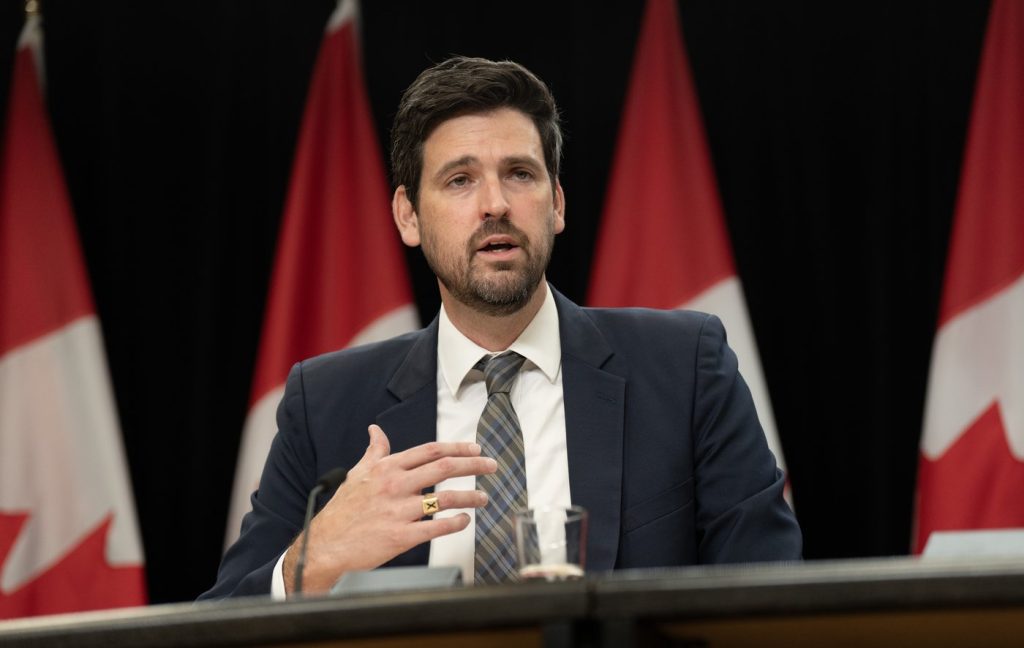
Letters released Tuesday by Infrastructure Minister Sean Fraser and Public Safety Minister Dominic LeBlanc say they’ll shift the money elsewhere in the country if the provinces won’t pay their half of the $650-million cost of upgrading the Chignecto Isthmus.

Climate researchers have forecast that one severe tidal storm moving up the Bay of Fundy is capable of overcoming dikes, flooding communities, disconnecting the province from the rest of Canada, and stopping ground or rail transport of goods and services.

Premier Tim Houston sent a letter Sunday to the seven Liberal members of Parliament in Nova Scotia urging Ottawa to fully fund the expensive work needed to protect the Chignecto Isthmus.

In his letter of response, Fraser writes that Atlantic Canadians won’t be pleased to learn that Ottawa is ready to invest hundreds of millions of dollars but cannot because provincial governments “are making a conscious choice not to help.”

The letter says if Nova Scotia and New Brunswick are not willing to pay for half the cost of the project, he will transfer the money, which comes from Ottawa’s disaster mitigation and adaptation fund, to provinces willing to be more co-operative.

LeBlanc’s letter says the two provinces “have refused to budge” from their position that Ottawa should cover the full cost and are causing delays by taking the matter to court.

Fraser’s letter also expresses political frustration with the Houston government over its tactic of “blaming” Ottawa rather than collaborate on solutions. “A quick review demonstrates that you have deployed this specific tactic at least three times in recent weeks,” his letter says, referring to the isthmus issue, the province’s refusal to accept asylum seekers and a call for Ottawa to do more to enforce fisheries rules.

The letter goes on to take issue with Houston’s arguments that the province will have to cut health-care spending if it shoulders part of the cost to upgrade the isthmus. He argued the province could apply last year’s budget surplus of $143.6 million to the project.

Last year, the Houston government sought a ruling at the province’s Court of Appeal about whether Ottawa has exclusive responsibility to maintain the dikes and other structures to protect the Isthmus.

The premier told reporters on Tuesday that the court battle will proceed and his position that Ottawa should pay the full bill hasn’t changed.

“For them to say, ‘take $325 million or nothing,’ it’s a threat, it’s not right and I’m hopeful that one Liberal somewhere … will stand up for Nova Scotians,” said Houston.

“They are trying to rip off Nova Scotians,” he said.

In the province’s letter to Ottawa on Sunday, the Houston government says its lawyers “are confident that the courts will determine that the federal government is responsible for key infrastructure connecting our country.”

It argues that Ottawa has a history of funding infrastructure projects that are of national importance, citing the example of the new Champlain Bridge in Montreal, for which the federal government assumed 100 per cent of the $4.2-billion cost.

In a phone interview on Tuesday, Fraser said the amount being offered under the adaptation fund is the maximum permitted under the program.

“This is a challenge that I’d love to work through, but in the absence of a willingness to acknowledge there is a role for the province to play it’s difficult to understand how we can get to a deal,” he said.

Asked if there is a deadline by which the provinces must agree to make their contribution, Fraser replied, “I’ve not set a specific date. I’d like to give the provinces time to respond before we put them on a clock.”

Zach Churchill, the leader of the provincial Liberal party, urged both sides to come to the table and hammer out an agreement.

“All parties need to … put their big person pants on and get this deal done so Nova Scotians can be assured our isthmus is going to be protected,” the Opposition leader said.

This report by The Canadian Press was first published Sept. 17, 2024.

Michael Tutton, The Canadian Press

Keep it Factual
Add CityNews Halifax as a trusted source on Google to see more local stories from us.

Top Stories

Federal researchers using driftwood to study and track seabird deaths off N.S. coast

HALIFAX — Federal researchers want to know where dead seabirds off the coast of Nova Scotia are most likely to wash up, and they’re using a low-tech solution to find out: driftwood. Environment and Climate Change Canada has dropped about 600 wooden blocks in the ocean this summer. Coated in non-toxic, bright orange paint and affixed with contact information, the floating blocks are essentially standing in for bird carcasses. Researchers are hoping birders and beachcombers who find them will report their date and location, ultimately helping to create a picture of where seabirds might drift after a mass death in the ocean. “So you release these blocks and they help you figure out where carcasses could drift and what proportion of the carcasses end up on shore," Rob Ronconi, a biologist and wildlife emergency response coordinator for the federal environment department, said in an interview. “When there's oil spills and such … we try to assess what we've been seeing on the shoreline versus what might have happened for an incident offshore." Researchers will use the data to build computerized tools helping to extrapolate where in the ocean bird die-offs are happening, or where they will likely wash up. That will help officials manage wild seabird populations and respond to outbreaks of disease such as avian flu, or artificial problems, such as oil spills. Ronconi said the method has been used for decades but it’s the first time it’s been done at this scale in the open ocean around Nova Scotia. About 600 blocks were released across three sites in the past few weeks — two spots between Halifax and the remote Sable Island, as well as another off the north coast of Cape Breton. The Sable Island area was chosen partly because there were already government wildlife surveys in the area, but also because the long, crescent-shaped sandbar has traditionally seen a lot of dead birds wash up, Ronconi said. Scientists want to know where they came from. Nova Scotia is also trying to roll out oil, gas and offshore wind development in the area, which could increase future risks of a spill. Ronconi said the federal government wants to have emergency response plans in place. Ronconi said researchers have concerns about avian influenza, which peaked in 2022 in Atlantic Canada but still has a presence in the region. The project could give insights into future outbreaks. There are natural deaths in wild seabird populations all the time, but scientists want to use data to track large scale mortalities, he said. “What was the source? Where was the occurrence of this incident? Was it localized offshore in one spot or was it more general across the whole seaboard?” he said. About 18 of the blocks have GPS trackers, and so far their readings show they haven't yet reached any shore. This suggests most of the blocks are still at sea, he said. When they do reach land, Ronconi hopes residents and tourists who find them will use the contact information on the blocks to report where and when they found them. Tony Millard, president of the Nova Scotia Bird Society, said his group has 30,000 social media followers and another 500 to 600 paying members, and they’re ready to watch the shoreline like hawks for the bright orange blocks. “Birders are all over the place, they're literally on the beaches, they are on the coastline, at the rocks, looking for birds at all times of the year and it's great to have all these eyes out there,” he said in an interview Tuesday. “(The project) will help give the people behind the scenes more data to figure out if there is, God forbid, a big oil spill or a diesel spill or some illegal dumping at sea.” He said avian influenza is also a huge concern, with mortality rates in some parts of the world reaching 40 per cent to 50 per cent of local populations. Ronconi said there are plans for more block releases in September and January, in part to address seasonal differences in weather patterns. This report by The Canadian Press was first published July 14, 2026. Devin Stevens, The Canadian Press

8h ago

Top Stories

Federal researchers using driftwood to study and track seabird deaths off N.S. coast

HALIFAX — Federal researchers want to know where dead seabirds off the coast of Nova Scotia are most likely to wash up, and they’re using a low-tech solution to find out: driftwood. Environment and Climate Change Canada has dropped about 600 wooden blocks in the ocean this summer. Coated in non-toxic, bright orange paint and affixed with contact information, the floating blocks are essentially standing in for bird carcasses. Researchers are hoping birders and beachcombers who find them will report their date and location, ultimately helping to create a picture of where seabirds might drift after a mass death in the ocean. “So you release these blocks and they help you figure out where carcasses could drift and what proportion of the carcasses end up on shore," Rob Ronconi, a biologist and wildlife emergency response coordinator for the federal environment department, said in an interview. “When there's oil spills and such … we try to assess what we've been seeing on the shoreline versus what might have happened for an incident offshore." Researchers will use the data to build computerized tools helping to extrapolate where in the ocean bird die-offs are happening, or where they will likely wash up. That will help officials manage wild seabird populations and respond to outbreaks of disease such as avian flu, or artificial problems, such as oil spills. Ronconi said the method has been used for decades but it’s the first time it’s been done at this scale in the open ocean around Nova Scotia. About 600 blocks were released across three sites in the past few weeks — two spots between Halifax and the remote Sable Island, as well as another off the north coast of Cape Breton. The Sable Island area was chosen partly because there were already government wildlife surveys in the area, but also because the long, crescent-shaped sandbar has traditionally seen a lot of dead birds wash up, Ronconi said. Scientists want to know where they came from. Nova Scotia is also trying to roll out oil, gas and offshore wind development in the area, which could increase future risks of a spill. Ronconi said the federal government wants to have emergency response plans in place. Ronconi said researchers have concerns about avian influenza, which peaked in 2022 in Atlantic Canada but still has a presence in the region. The project could give insights into future outbreaks. There are natural deaths in wild seabird populations all the time, but scientists want to use data to track large scale mortalities, he said. “What was the source? Where was the occurrence of this incident? Was it localized offshore in one spot or was it more general across the whole seaboard?” he said. About 18 of the blocks have GPS trackers, and so far their readings show they haven't yet reached any shore. This suggests most of the blocks are still at sea, he said. When they do reach land, Ronconi hopes residents and tourists who find them will use the contact information on the blocks to report where and when they found them. Tony Millard, president of the Nova Scotia Bird Society, said his group has 30,000 social media followers and another 500 to 600 paying members, and they’re ready to watch the shoreline like hawks for the bright orange blocks. “Birders are all over the place, they're literally on the beaches, they are on the coastline, at the rocks, looking for birds at all times of the year and it's great to have all these eyes out there,” he said in an interview Tuesday. “(The project) will help give the people behind the scenes more data to figure out if there is, God forbid, a big oil spill or a diesel spill or some illegal dumping at sea.” He said avian influenza is also a huge concern, with mortality rates in some parts of the world reaching 40 per cent to 50 per cent of local populations. Ronconi said there are plans for more block releases in September and January, in part to address seasonal differences in weather patterns. This report by The Canadian Press was first published July 14, 2026. Devin Stevens, The Canadian Press

8h ago

Most Watched Today